Many of our emotional responses are a result of events in the past. Letting go of the past provides an opportunity to react differently and overcome recurring difficulties.
‘The mythological hero is the champion not of things become but of things becoming; the dragon to be slain by him is precisely the monster of the status quo: Holdfast, the keeper of the past. From obscurity the hero emerges, but the enemy is great and conspicuous in the seat of power; he is enemy, dragon, tyrant, because he turns to his own advantage the authority of his position. He is Holdfast not because he keeps the past but because he keeps.’
Joseph Campbell. The Hero with a Thousand Faces
Human emotional responses are just our own history being brought into the present by the current context. If our reactions are our history, and our reactions are our enemies, then our own history has become our enemy.
Steven C. Hayes, Kirk D. Strosahl and Kelly G. Wilson. Acceptance and Commitment Therapy: An Experiential Approach to Behavior Change.
* In a series of posts I call mythology Monday, I look at quotes from the work of mythologist Joseph Campbell and consider them alongside extracts from books and papers on acceptance and commitment therapy (ACT) and related publications.
Loneliness can be a crippling feeling. Richard Ford described it as waiting in a line where the front gets farther and farther away. Try, for just one second, to willingly stand in that line.
Loneliness, I’ve read, is like being in a long line, waiting to reach the front where it’s promised something good will happen. Only the line never moves, and other people are always coming in ahead of you, and the front, the place where you want to be, is always farther and farther away until you no longer believe it has anything to offer you.
Richard Ford. Canada.
‘I once worked briefly with a patient of a close colleague of mine. I was consulted on the case. The patient felt such terrible loneliness that she believed that if she willingly allowed herself to feel its far-reaching effects, she would be destroyed by its intensity. Her marriage had broken up, she had no job, she lacked adequate education to find anything but the most menial employment, her friends had abandoned her, she was barely surviving on disability insurance, and she’d tried to commit suicide and failed. Her life seemed absolutely empty and meaningless. In a therapy session, my colleague and I asked if she would allow herself to feel her loneliness, and she kept saying no until we got her down to agree to be fully willing for one second. She agreed to feel lonely openly and without defense for one second. That was a start.
‘After months of working with ACT she terminated therapy. Years passed. We’d completely lost track of her but she called a few weeks ago. Now, more than a decade later, she has a degree, a job, a partner, friends, and a purpose. She has a life. She walked through hell to get there, one moment at a time. And that journey started somewhere. It started with her willingness to feel lonely, to feel it deliberately without any defenses, as you might reach out to feel a fine fabric, for one single solitary second.’
Steven C. Hayes & Spencer Smith. Get Out Of Your Mind and Into Your Life: The New Acceptance and Commitment Therapy.
In mythology, clowns represent deception. They, like so many of us, hide their true feelings behind a fake smile.
‘Universal [in mythology] is the casting of the antagonist, the representative of evil, in the role of the clown. Devils—both the lusty thickheads and the sharp, clever deceivers—are always clowns. Though they may triumph in the world of space and time, both they and their work simply disappear when the perspective shifts to the transcendental. They are the mistakers of shadow for substance: they symbolize the inevitable imperfections of the realm of shadow, and so long as we remain this side the veil cannot be done away.’
Joseph Campbell. The Hero with a Thousand Faces
The fact is that most people are not open or honest about the struggle they go through with their own thoughts and feelings. They ‘put on a brave face’ and ‘keep a stiff upper lip’. They are like the proverbial clown crying on the inside; the bright face paint and chirpy antics are all we see. It’s common in therapy to hear clients say things like, ‘If my friends/family/colleagues could hear me now, they’d never believe it. Everyone thinks I’m so strong/confident/happy/independent…’
Russ Harris. The Happiness Trap.
* In a series of posts I call mythology Monday, I look at quotes from the work of mythologist Joseph Campbell and consider them alongside extracts from books and papers on acceptance and commitment therapy (ACT) and related publications.
This is even after the Easter Bunny turned out to be a lie. Even after Santa Claus and the Tooth Fairy and Saint Christopher and Newtonian physics and the Niels Bohr model of the atom, this stupid, stupid kid still believed the Mommy
Someday, when he’s grown up, the Mommy tells the shadow, the kid will come back here and see how he’s grown into the exact outline she’d planned for him this night.
It wasn’t until years later, until this stupid little loser was through college with honors and he’d busted his hump to get into the University of Southern California School of Medicine—until he was twenty-four years old and in his second year of medical school, when his mother was diagnosed and he was named as her guardian—it wasn’t until then that it dawned on this little stooge that growing strong and rich and smart was only the first half of your life story.
Chuck Palahniuk. Choke.
At some point you probably used to believe in Santa Claus, the Easter bunny, the tooth fairy or dragons, goblins and vampires. And almost everyone changes some of their beliefs about religion, politics, money, family or health at some point, as they grow older. So by all means, have your beliefs— but hold them lightly. Keep in mind that all beliefs are stories, whether or not they’re ‘true’.
A smile, even a fake smile, can have many positive effects on the people around you, such as gaining trust and making new friends. It might even make you feel a lot better too.
He shouted for silence from his companions, and then turned to me with the widest and most radiant smile I’d ever seen.
‘Good mornings, great sirs!’ he greeted us. ‘Welcome in Bombay! You are wanting it cheap and excellent hotels, isn’t it?’
He stared straight into my eyes, that enormous smile not wavering. There was something in the disk of his smile—a kind of mischievous exuberance, more honest and more excited than mere happiness—that pierced me to the heart. It was the work of a second, the eye contact between us. It was just long enough for me to decide to trust him—the little man with the big smile. I didn’t know it then, but it was one of the best decisions of my life.
Gregory David Roberts. Shantaram.
Have you noticed that people who smile tend to be surrounded by a lot of people (and it’s not because they’re thinking, ‘What’s that wise guy smiling about?’)? The reason is that being in their company is pleasant. After all, you broadcast your emotional state from your facial expression. Some researchers have discovered links between how intensively people smile and the quality of their relationships, and even claim to be able to predict how long people will live from old photographs of people smiling.
Also, when you focus on smiling, you reduce your stress levels, encouraging more peaceful and relaxed sensations. By putting a smile on your face, you automatically begin to lift your mood. You don’t even have to be genuinely smiling – begin by just faking it and see what happens!
Even funny stories and myths can help us see the truth behind negative thoughts. Comedy shows us that we don’t always have to take out thoughts too seriously.
‘Myth is a directing of the mind and heart, by means of profoundly informed figurations, to that ultimate mystery which fills and surrounds all existences. Even in the most comical and apparently frivolous of its moments, mythology is directing the mind to this unmanifest which is just beyond the eye.’
Ask the client to choose a cartoon character he thinks might represent or symbolize how he feels or behaves, and particularly a character he could never take seriously. Using thoughts that are typically sticky for the client (i.e., that prevent psychological lexibility or pull him away from his values), have him imagine these thoughts being spoken in the voice of that cartoon character. For example, a client who’s anxious and detail oriented might pick Brainy Smurf because Brainy is always worrying over every little thing, yet the other Smurfs dismiss him and never take him seriously. In this case, ask the client to hear his negative thoughts in Brainy’s annoying but comical voice.
The hope is that the client won’t be able to take those thoughts seriously. Instead, he will see that it doesn’t matter whether they’re right or wrong, and that he has a choice about whether to attend to them or not.’
Jill A. Stoddard and Niloofar Afari (eds.). The Big Book of ACT Metaphors. A Practitioner’s Guide to Experiential Exercises & Metaphors in Acceptance & Commitment Therapy.
* In a series of posts I call mythology Monday, I look at quotes from the work of mythologist Joseph Campbell and consider them alongside extracts from books and papers on acceptance and commitment therapy (ACT) and related publications.
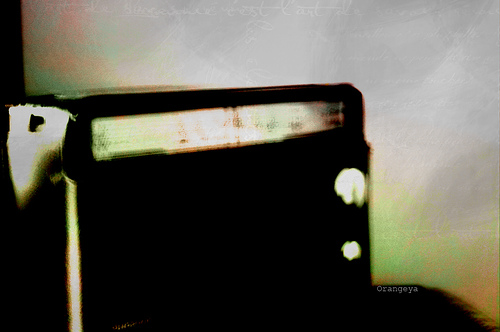
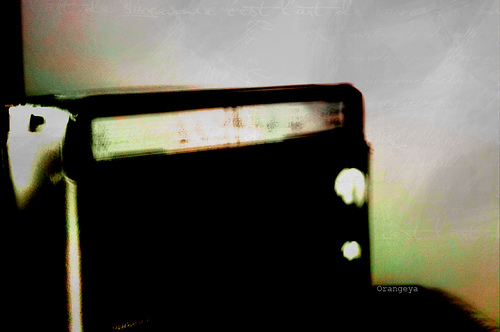
Unpleasant thoughts can fill your head like a radio station that only broadcasts bad news. Let those thoughts disappear into the background like you’ve turned the radio down low.
‘He … switches on the radio to shut off their conversation. The four-thirty news: earthquake in Hawaii, kidnapping of two American businessmen in El Salvador, Soviet tanks patrolling the streets of Kabul in the wake of last Sunday’s mysterious change of leadership in Afghanistan. In Mexico, a natural-gas pact with the United States signals possible long-term relief for the energy crisis. In California, ten days of brush fire have destroyed more acres than any such fire since 1970. In Philadelphia, publishing magnate Walter Annenberg has donated fifty thousand dollars to the Catholic Archdiocese to help defray costs of the controversial platform from which Pope John Paul the Second is scheduled to celebrate Mass on October the third.’
John Updike. Rabbit is Rich.
Our mind is a bit like a radio, constantly playing in the background. Most of the time it’s the Radio Doom and Gloom Show, broadcasting negative stories twenty-four hours every day. It reminds us of bad things from the past (You really screwed up there!), it warns us of bad things to come in the future (You’re going to fail again!), and it gives us regular updates on everything that’s wrong with us (Your life’s a mess!). Once in a while it broadcasts something useful or cheerful, but not too often. So if we’re constantly tuned in to this radio, listening to it intently and, worse, believing everything we hear, then we have a sure-fire recipe for stress and misery.
Unfortunately, there’s no way to switch off this radio. Even Zen masters are unable to achieve such a feat. Sometimes the radio will stop of its own accord for a few seconds (or even—very rarely—for a few minutes). But we just don’t have the power to make it stop (unless we short-circuit it with drugs, alcohol, or brain surgery). In fact, generally speaking, the more we try to make this radio stop, the louder it plays.
But there is an alternative approach. Have you ever had a radio playing in the background, but you were so intent on what you were doing that you didn’t really listen to it? You could hear the radio playing, but you weren’t paying attention to it. In practicing defusion skills, we are ultimately aiming to do precisely that with our thoughts. Once we know that thoughts are just bits of language, we can treat them like background noise—we can let them come and go without focusing on them and without being bothered by them.’
Metaphors, like myths, stimulate feelings and thoughts that the mind can comprehend, clarifying concepts that would otherwise be difficult to understand.
‘To grasp the full value of the mythological figures that have come down to us, we must understand that they are not only symptoms of the unconscious (as indeed are all human thoughts and acts) but also controlled and intended statements of certain spiritual principles, which have remained as constant throughout the course of human history as the form and nervous structure of the human physique itself. Briefly formulated, the universal doctrine teaches that all the visible structures of the world—all things and beings—are the effects of a ubiquitous power out of which they rise, which supports and fills them during the period of their manifestation, and back into which they must ultimately dissolve.
The apprehension of the source of this undifferentiated yet everywhere particularized substratum of being is rendered frustrate by the very organs through which the apprehension must be accomplished. The forms of sensibility and the categories of human thought, which are themselves manifestations of this power, so confine the mind that it is normally impossible not only to see, but even to conceive, beyond the colorful, fluid, infinitely various and bewildering phenomenal spectacle. The function of ritual and myth is to make possible, and then to facilitate, the jump—by analogy. Forms and conceptions that the mind and its senses can comprehend are presented and arranged in such a way as to suggest a truth or openness beyond.’
Joseph Campbell. The Hero with a Thousand Faces
Metaphors make abstract concepts concrete by providing a rich verbal context that evokes thoughts, feelings, and behaviors similar to those evoked by the client’s actual situation.
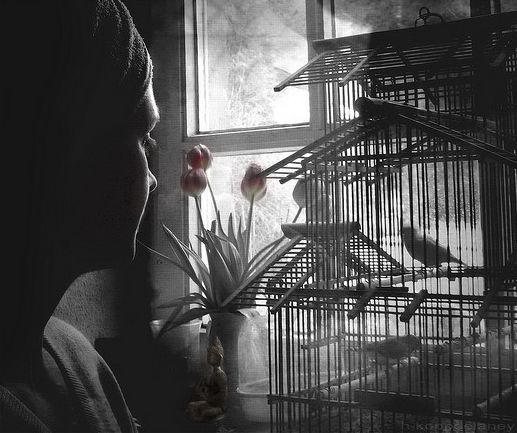
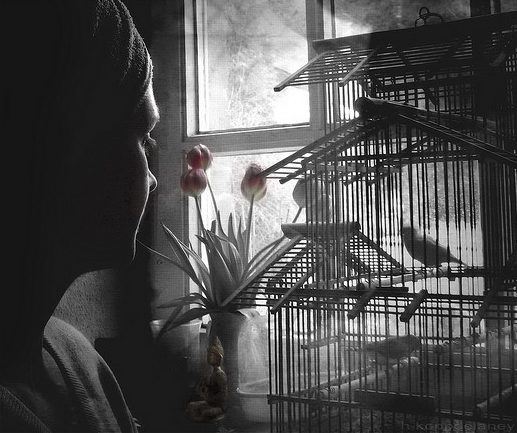
The story-like quality of metaphors has the advantage of providing instructive lessons that are rich in emotional and perceptual detail, mimicking direct contact with the environment and making the experience more memorable. Metaphors create a verbal world where clients can explore new behaviors and discover the contingencies for themselves, circumventing the potential traps of learning by rules. Metaphors also draw attention to salient features of a situation that may go unnoticed in clients’ real-world environment, thus liberating them from the cage built by language.
Matthieu Villatte, Jennifer L. Villatte and Jean-Louis Monestès, in The Big Book of ACT Metaphors. A Practitioner’s Guide to Experiential Exercises & Metaphors in Acceptance & Commitment Therapy. (Jill A. Stoddard and Niloofar Afari (eds.).
* In a series of posts I call mythology Monday, I look at quotes from the work of mythologist Joseph Campbell and consider them alongside extracts from books and papers on acceptance and commitment therapy (ACT) and related publications.
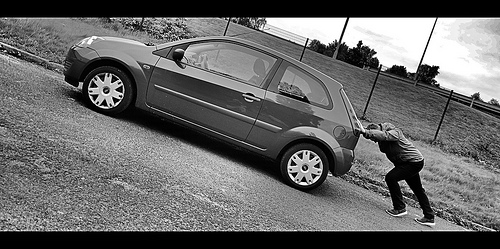
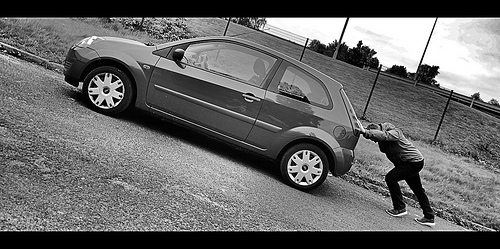
When you feel have tried everything, and yet still cannot solve your problem, that is the moment when you can get creative and find solutions where you thought there were none.
‘This one thing I have done well, this I like, this I must praise, that there is now an end to that hatred against myself, to that foolish and dreary life! I praise you, Siddhartha, after so many years of foolishness, you have once again had an idea, have done something, have heard the bird in your chest singing and have followed it!
‘Thus he praised himself, found joy in himself, listened curiously to his stomach, which was rumbling with hunger. He had now, so he felt, in these recent times and days, completely tasted and spit out, devoured up to the point of desperation and death, a piece of suffering, a piece of misery. Like this, it was good. For much longer, he could have stayed with Kamaswami, made money, wasted money, filled his stomach, and let his soul die of thirst; for much longer he could have lived in this soft, well upholstered hell, if this had not happened: the moment of complete hopelessness and despair, that most extreme moment, when he hang over the rushing waters and was ready to destroy himself. That he had felt this despair, this deep disgust, and that he had not succumbed to it, that the bird, the joyful source and voice in him was still alive after all, this was why he felt joy, this was why he laughed, this was why his face was smiling brightly under his hair which had turned gray.’
Herman Hesse. Siddharta.
In common, everyday language, hopelessness is not an acceptable state of mind. Therapists often work hard to counter feelings of hopelessness and to instill optimism about the future. However, seeing a hopeless situation as hopeless is not a bad thing. If the client can give up on what hasn’t been working, maybe there is something else to do. Thus, in this phase of ACT, the therapist tries to help the client face hopelessness, but as a kind of creative act. The goal is not to elicit a feeling of hopelessness or a belief in hopelessness; instead, the objective is to engender a posture of giving up strategies when giving up is called for in the service of larger goals, even if what comes next is not known. When a client is caught in a self-defeating struggle, it is important to acknowledge it. Hopelessness in this case doesn’t mean despair; it is creative hopelessness because it allows for new things to emerge.
Steven C. Hayes, Kirk D. Strosahl and Kelly G. Wilson. Acceptance and Commitment Therapy: An Experiential Approach to Behavior Change.













 thefictiontherapist.com