Symbols are only the vehicles of communication; they must not be mistaken for the final term, the tenor, of their reference. No matter how attractive or impressive they may seem, they remain but convenient means, accommodated to the understanding. Hence the personality or personalities of God—whether represented in trinitarian, dualistic, or Unitarian terms, in polytheistic, monotheistic, or henotheistic terms, pictorially or verbally, as documented fact or as apocalyptic vision—no one should attempt to read or interpret as the final thing. The problem of the theologian is to keep his symbol translucent, so that it may not block out the very light it is supposed to convey. “For then alone do we know God truly,” writes Saint Thomas Aquinas, “when we believe that He is far above all that man can possibly think of God.” And in the Kena Upanishad, in the same spirit: “To know is not to know; not to know is to know.” Mistaking a vehicle for its tenor may lead to the spilling not only of valueless ink, but of valuable blood.’
Joseph Campbell. The Hero with a Thousand Faces
‘Some spiritual and religious traditions are among the best-documented sources of physical and psychological health, particularly the more experiential, accepting, and mystical practices such as meditation and prayer. This is not surprising, because these cultural traditions were among the first to emerge after human language really began to evolve into the elaborate symbolic system we have today. Yet psychotherapists often attack spiritual and religious traditions as if they were inherently toxic to an individual’s autonomy and psychological health.
The reasons for this skepticism are understandable. It is known that rigid and punitive religious systems are toxic to human health. There are dramatic examples of harmful social control and dogma in religion (e.g., cult suicide, ethnic cleansing). Often, clients who seek out psychotherapy are likely to be among those who have been harmed. But we need to be less arrogant and more open to aspects of human culture that are helpful.
In this larger context, ACT is one small effort to solve the psychological problems language has created. That is “the work” we have before us, and it is perhaps the most important psychological task we face as a species. If we as psychotherapists take on this burden, we need to look again at the many honorable traditions (religious, spiritual, mystical, therapeutic) that have attempted to address human suffering and try to filter out what works from what does not.’
Steven C. Hayes, Kirk D. Strosahl and Kelly G. Wilson. Acceptance and Commitment Therapy: An Experiential Approach to Behavior Change.
* In a series of posts I call mythology Monday, I look at quotes from the work of mythologist Joseph Campbell and consider them alongside extracts from books and papers on acceptance and commitment therapy (ACT) and related publications.
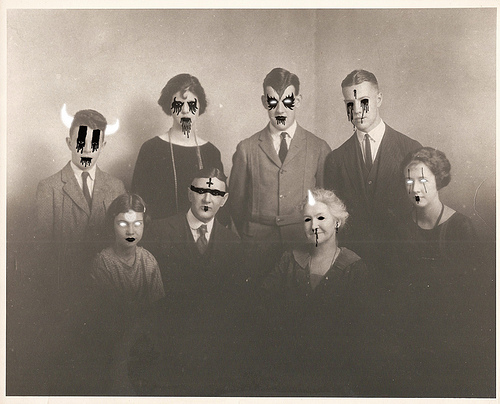
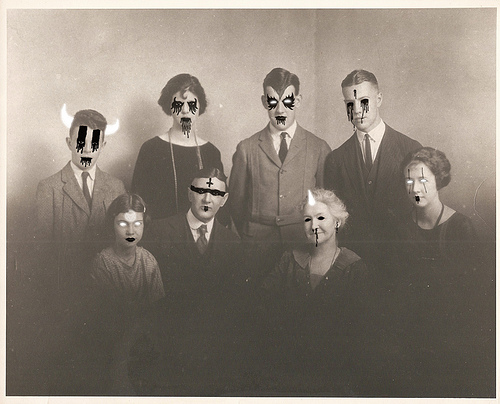
Demons don’t only exist in Halloween stories or scary movies. They can appear in all of us, stopping us from making progress in life. Until we accept them.
‘In films such as Tightrope, Lethal Weapon, Angel Heart, and The Morning After, the detective himself became the psycho, suffering from a wide variety of modern maladies sexual obsession, suicidal impulse, traumatic amnesia, alcoholism. In these films the key to justice became the cop’s psychoanalysis of himself. Once the detective came to terms with his inner demons, apprehending the criminal was almost an afterthought.
This evolution was a telling statement about our changing society. Gone was the day when we could comfort ourselves with the notion that all the crazy people were locked up, while we sane people were safely outside the asylum walls. Few of us are so naive today. We know that, given a certain conjunction of events, we too could part company with reality. These Psycho-Thrillers spoke to this threat, to our realization that our toughest task in life is self-analysis as we try to fathom our humanity and bring peace to the wars within.’
Robert McKee. Story: Substance, Structure, Style, and the Principles of Screenwriting
‘I don’t want to live surrounded by demons!’ Well, I’m sorry to be the bearer of bad news, but you already are. And those demons will keep showing up, again and again, as soon as you start to take your life in a valued direction. Why so? Again, it all stems back to evolution. Remember, the mind of our ancestors had one overriding imperative: ‘Don’t get killed!’ And an important factor in not getting yourself killed is to get to know your environment. The better you know the terrain and the local wildlife then, obviously, the safer you are; whereas venturing into unknown territory exposes you to all sorts of exotic dangers. So if one of our ancestors decided to explore a new area, his mind would go into a state of red alert. ‘Look out!’ ‘Be careful!’ ‘Could be a crocodile in that pond or a leopard in the bushes!’ And thanks to evolution, our modern minds do the same, only far more extensively.
Thus, as soon as we start to do something new, our mind will start warning us: ‘You might fail’, ‘You might make a mistake’, ‘You might get rejected.’ It warns us with negative thoughts, with disturbing images or bad memories, and with uncomfortable feelings and sensations. And all too often we let these warnings stop us from taking our lives in the direction we really want.’
It’s normal that your minds drifts off from time to time. If it does, it can help to recognise the thought and even give it a name as you return to the present moment.
Moody returned to the present with a jolt, and saw that Thomas Balfour was still looking at him, with an expression of intrigued expectation upon his face.
‘I beg your pardon,’ Moody said, in confusion. ‘I believe I must have drifted off into my own thoughts—for a moment—’
‘What were you thinking of?’ said Balfour.
What had he been thinking of? Only the cravat, the silver hand, that name, gasped out of the darkness. The scene was like a small world, Moody thought, possessed of its own dimensions. Any amount of ordinary time could pass, when his mind was straying there. There was this large world of rolling time and shifting spaces, and that small, stilled world of horror and unease; they fit inside each other, a sphere within a sphere. How strange, that Balfour had been watching him; that real time had been passing—revolving around him, all the while—
‘I wasn’t thinking of anything in particular,’ he said. ‘I have endured a difficult journey, that is all, and I am very tired.’
Eleanor Catton. The Luminaries.
‘Inevitably, there will be times when you get caught up in your thoughts. You may start daydreaming, or you may get trapped in your psychological pain. You may think about what you had for breakfast, what time the kids are due home from school, what movie you want to watch that night, or an ex-girlfriend you haven’t seen in years. As you know, your mind is extremely adept at creating thought. It’s likely you’ll find when you sit quietly that it seems as if your mind’s already natural talents have been amplified. You may have millions of thoughts flowing through your mind, and it’s likely you’ll get caught in them from time to time.
When this happens, simply notice that it has happened, and try to bring yourself back to the present moment and your observing self. Note that you have been in a thought and then return to the here and now.
One technique that is particularly effective to use while sitting is to label your thoughts. As you watch your thoughts pass before your mind’s eye, you may say, “I am having the thought that I had eggs for breakfast,” or, “I am having the feeling that I am sad.” It is also useful to note when you have drifted off, and even the thought that you have drifted off with: “I have been daydreaming about my ex-girlfriend. I am having the thought that I have been daydreaming.”
This can be particularly effective while you sit, because it is brief but still allows you to notice your thoughts, feelings, and bodily sensations as they come and go.’
Steven Hayes and Spencer Smith. Get out of your mind and into your life: the new acceptance and commitment therapy.
The Greek myth of Orpheus and Eurydice, and hundreds of analogous tales throughout the world, suggest, as does this ancient legend of the farthest East, that in spite of the failure recorded, a possibility exists of a return of the lover with his lost love from beyond the terrible threshold. It is always some little fault, some slight yet critical symptom of human frailty, that makes impossible the open interrelationship between the worlds; so that one is tempted to believe, almost, that if the small, marring accident could be avoided, all would be well. In the Polynesian versions of the romance, however, where the fleeing couple usually escape, and in the Greek satyr-play of Alcestis, where we also have a happy return, the effect is not reassuring, but only superhuman. The myths of failure touch us with the tragedy of life, but those of success only with their own incredibility. And yet, if the monomyth is to fulfill its promise, not human failure or superhuman success but human success is what we shall have to be shown.’
Joseph Campbell. The Hero with a Thousand Faces
‘You have only so much time on this earth, and you don’t know how much. The question “Are you going to live, knowing you will die?” is not fundamentally different than these questions: “Are you going to love, knowing you will be hurt?” Or, “Are you going to commit to living a valued life knowing you will sometimes not meet your commitments?” Or, “Will you reach for success knowing you will sometimes fail?” The potential for pain and the sense of vitality you gain from these experiences go together. If your life is truly going to be about something, it helps to look at it from the perspective of what you would want the path your life leaves behind to mean.’
Steven C. Hayes and Spencer Smith. Get Out of Your Mind and Into Your Life: The New Acceptance and Commitment Therapy.
* In a series of posts I call mythology Monday, I look at quotes from the work of mythologist Joseph Campbell and consider them alongside extracts from books and papers on acceptance and commitment therapy (ACT) and related publications.
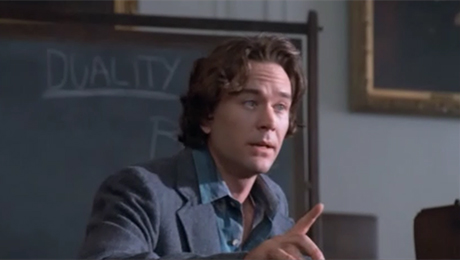
We can all benefit from taking the time to listen to our inner voices. Writers, especially, need to free those inner voices to remove inhibitions and write honestly.
The Dark Half. Directed by: George A. Romero. Writers: Stephen King (novel), George A. Romero (screenplay). Starring: Timothy Hutton.
‘Learning mindfulness (like life in general) will always present difficulties and obstacles. Perhaps you’re pretty nasty to yourself through excessive self-criticism when things don’t work out how you want them to. The way to deal with this harsh inner voice is to listen to it, give it space to unfurl and bring to it a sense of curiosity in a gentle, warm way.’
Shamash Alidina and Joelle Jane Marshall. Mindfulness Workbook for Dummies.
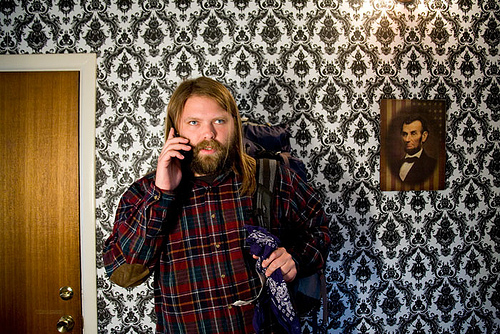
Love can be intoxicating, especially in the early stages of the relationship. Later, when reality kicks in and the intensity cools, it’s the perfect time to develop a deeper, more meaningful love.
Human beings,” I inhale my win’s nutmeg steam, “are walking bundles of cravings. Cravings for food, water, shelter, warmth; sex and companionship; status, a tribe to belong to; kicks control, purpose; and so on, all the way down to chocolate-brown bathroom suites. Love is one to satisfy some of these cravings. But love’s not just the drug: it’s also the dealer. Love wants love in return, am I right? Like drugs, the highs look divine, and I envy the users. But when the side effects kick in – jealousy, rages, the grief, I think, Count me out. Elizabethans equated romantic love with insanity. Buddhists view it as a brat throwing a tantrum at the picnic of the calm mind.”
David Mitchell. The Bone Clocks.
‘What few people realize is that an authentic, loving, meaningful relationship typically only develops once the honeymoon phase is over (another fact the songwriters, poets, and pop stars seem oblivious to). In the honeymoon phase, it’s as if you’re on a drug that intoxicates you and plays with your senses. When you’re high on it, your partner seems wonderful. But you’re not seeing reality; you’re merely seeing a drug-induced fantasy. And only when the drug wears off do you see your partner as he really is. And you suddenly realize that the knight’s shining armor is covered in rust spots, and his white horse is really a gray donkey. Or the maiden’s pure silk dress is only cheap nylon, and her long golden locks are really a wig. Naturally this comes as a bit of a shock. But herein lies the opportunity to build an authentic intimate relationship between two people who see each other as they really are. And as this relationship develops, there will be new feelings of love—perhaps not as intense or intoxicating, but infinitely richer and more fulfilling.’
The agony of breaking through personal limitations is the agony of spiritual growth. Art, literature, myth and cult, philosophy, and ascetic disciplines are instruments to help the individual past his limiting horizons into spheres of ever-expanding realization.’
Joseph Campbell. The Hero with a Thousand Faces
‘We thrill in watching a superb performance, whether athletic or artistic, because it allows us to participate in the magic of true mastery, to be uplifted, if only briefly, and perhaps to share in the intention that each of us, in our own way, might touch such moments of grace and harmony in the living of our own lives.’
Jon Kabat-Zinn. Wherever You Go, There You Are: Mindfulness Meditation in Everyday Life.
* In a series of posts I call mythology Monday, I look at quotes from the work of mythologist Joseph Campbell and consider them alongside extracts from books and papers on acceptance and commitment therapy (ACT) and related publications.
And his life was now, he felt, one monumental unreality, in which everything that did not matter – professional ambitions, the private pursuit of status, the colour of wallpaper, the size of an office or the matter of a dedicated car parking space – was treated with the greatest significance, and everything that did matter – pleasure, joy, friendship, loved – was deemed somehow peripheral.”
Richard Flanagan. The Narrow Road to the Deep North.
“When you hear ‘She is very successful’ or ‘He’s made a success of himself’, what does that conjure up for you? Our society generally defines success in terms of achieving goals: fame, wealth, status and respect; a big house, a luxury car, a prestigious job, a huge salary. When people achieve these things, our society tends to label them as ‘successful’. But if we buy into this popular notion of success, we set ourselves up for a lot of unnecessary suffering.
How so? Well, this view of success inevitably pulls us into the ‘goal-focused life’, where we are always striving to achieve the next goal. We may strive for more money, a larger house, a better neighbourhood, smarter clothes, a slimmer body, bigger muscles, more status, more fame, more respect and so on. We may strive to win this game or tournament, or make that sale, or get that promotion, or win that contract, or find a more attractive partner, or buy that smart car, or get that qualification, or earn that university degree. And the illusion is, ‘When I achieve this goal, then I will be successful.’
There are at least three big problems associated with going through life this way. First, there’s no guarantee you will achieve those goals, or they may be a long way off – which leads to chronic frustration and disappointment. Second, even if you do achieve them, they will not give you lasting happiness; usually they give you a brief moment of pleasure, satisfaction or joy – and then you start to focus on the next goal. Third, if you buy into this notion of success, it will put you under tremendous pressure – because you have to keep on achieving and achieving to maintain it.’
Totem, tribal, racial, and aggressively missionizing cults represent only partial solutions of the psychological problem of subduing hate by love; they only partially initiate. Ego is not annihilated in them; rather, it is enlarged; instead of thinking only of himself, the individual becomes dedicated to the whole of his society. The rest of the world meanwhile (that is to say, by far the greater portion of mankind) is left outside the sphere of his sympathy and protection because outside the sphere of the protection of his god. And there takes place, then, that dramatic divorce of the two principles of love and hate which the pages of history so bountifully illustrate. Instead of clearing his own heart the zealot tries to clear the world. The laws of the City of God are applied only to his in-group (tribe, church, nation, class, or what not) while the fire of a perpetual holy war is hurled (with good conscience, and indeed a sense of pious service) against whatever uncircumcised, barbarian, heathen, “native,” or alien people happens to occupy the position of neighbor.
The world is full of the resultant mutually contending bands: totem-, flag-, and party-worshipers. Even the so-called Christian nations—which are supposed to be following a “World” Redeemer-are better known to history for their colonial barbarity and internecine strife than for any practical display of that unconditioned love, synonymous with the effective conquest of ego, ego’s world, and ego’s tribal god, which was taught by their professed supreme Lord: “I say unto you, Love your enemies, do good to them which hate you.’
Joseph Campbell. The Hero with a Thousand Faces
‘Imagine you live in a small country that shares a border with a hostile neighbour. There is long-standing tension between the two countries. The neighbouring country has a different religion and a different political system, and your country sees it as a major threat. There are three possible scenarios for how your country can relate to its neighbour.
The worst-case scenario is war. Your country attacks, and the other one retaliates (or vice-versa). As both countries get pulled into a major war, the people of both nations suffer. (Think of any major war, and the huge costs involved, in terms of life, money and wellbeing.)
Another scenario, better than the first but still far from satisfactory, is a temporary truce. Both countries agree to a cease-fire, but there is no reconciliation. Resentment seethes beneath the surface, and there is the constant underlying threat that war will break out again. (Think of India and Pakistan, with the constant background threat of nuclear war, and the intense hostility between Hindus and Muslims.)
The third possibility is genuine peace. You acknowledge your differences, and allow them just to be. This doesn’t get rid of the other country, nor does it mean that you necessarily like it or even want it there. Nor does it mean that you approve of its politics or religion. But because you’re no longer at war, you can now use your money and resources to build up the infrastructure of your own country, instead of squandering them on the battlefield.
The first scenario, war, is like the struggle to get rid of unwanted thoughts and feelings. It’s a battle that can never be won, and it consumes a huge amount of time and energy.
The second scenario, a truce, is definitely better, but it’s still a long way from true acceptance. It’s more like a grudging tolerance; there’s no sense of moving forward to a new future. Although there is no active warfare, the hostility remains, and you are resigned to the ongoing tension. A grudging tolerance of thoughts and feelings is better than an outright struggle, but it leaves you feeling stuck and somewhat helpless. It’s a sense more of resignation than of acceptance, of entrapment rather than freedom, of being stuck rather than moving forward.
The third scenario, peace, represents true acceptance. Notice that in this scenario your country doesn’t have to like the other country, approve of its being there, convert to its religion, or learn to speak its language. You simply make peace with them. You acknowledge your differences, you give up trying to change their politics or religion, and you focus your efforts on making your own country a better place to live. It’s the same when you truly accept your uncomfortable thoughts and feelings. You don’t have to like them, want them, or approve of them. You simply make peace with them and let them be. This leaves you free to focus your energy on taking action—action that moves your life forward in a direction you value.’
* In a series of posts I call mythology Monday, I look at quotes from the work of mythologist Joseph Campbell and consider them alongside extracts from books and papers on acceptance and commitment therapy (ACT) and related publications.













 thefictiontherapist.com