Great storytelling isn’t just conflict between characters. It’s conflict between characters and their values. When your hero experiences character change, he challenges and changes basic beliefs, leading to new moral action. A good opponent has a set of beliefs that come under assault as well. The beliefs of the hero have no meaning, and do not get expressed in the story, unless they come into conflict with the beliefs of at least one other character, preferably the opponent.
John Truby. The Anatomy of Story: 22 Steps to Becoming a Master Storyteller.
In ACT, the therapist is engaging the client in a kind of contest between two main players. On one side is the client’s mind. By “mind,” we mean the set of rules and relations that the client uses to order the world. Because so many of these are culturally established, it can be clinically useful to speak of “mind” as if it is another person or something slightly external (as indeed it is in the sense of being a cultural intrusion into the individual). On the other side, there is the wisdom of the client’s direct experience. The client has directly contacted certain outcomes. The mind and experience are in fundamental conflict. The therapist’s job is to challenge the client’s reliance on verbal rules so that experiential wisdom can play a greater role. The challenge is to undermine ineffective rules and replace them with contingency-shaped behavior, accurate tracks, and augmentals linked to chosen values.
Steven C. Hayes, Kirk D. Strosahl, and Kelly G. Wilson. Acceptance and Commitment Therapy: An Experiential Approach to Behavior Change
In those moments when, like Oblomov, you feel like you’re getting nowhere, try to find the will to continue. Don’t let life’s swamps keep you from following your path.
‘Twas as though some one had stolen from him, and besmirched, the store of gifts with which life and the world had dowered him; so that always he would be prevented from entering life’s field and sailing across it with the aid of intellect and of will. Yes, at the very start a secret enemy had laid a heavy hand upon him and diverted him from the road of human destiny. And now he seemed to be powerless to leave the swamps and wilds in favour of that road. All around him was a forest, and ever the recesses of his soul were growing dimmer and darker, and the path more and more tangled, while the consciousness of his condition kept awaking within him less and less frequently – to arouse only for a fleeting moment his slumbering faculties. Brain and volition alike had become paralysed, and, to all appearances, irrevocably – the events of his life had become whittled down to microscopical proportions. Yet even with them he was powerless to cope – he was powerless to pass from one of them to another. Consequently they bandied him to and fro like the waves of the ocean. Never was he able to oppose to any event elasticity of will; never was he able to conceive, as the result of any event, a reasoned-out impulse. Yet to confess this, even to himself, always cost him a bitter pang: his fruitless regrets for lost opportunities, coupled with burning reproaches of conscience, always pricked him like needles, and led him to strive to put away such reproaches and to discover a scapegoat….
Once again Oblomov sank asleep; and as he slept he dreamed of a different period, of different people, of a different place from the present. Let us follow him thither.
If a person is wholly committed to not experiencing any unpleasant or difficult thoughts, feelings, sensations, or images, then that person will be unable to commit to and maintain a course of action because every course will eventually evoke something that is unpleasant. With valuing love comes the experience of loss, with valuing community conies the possibility of rejection, with valuing creativity comes a negative evaluation of one’s abilities. Metaphorically, it, as if you were on a journey called “living well” and you ran into a swamp that stretched as far as the eye could see. Swamps are no fun. They, smelly, they, icky, they, scary, and yet swamps are part of the journey. Life asks, “Will you wade into the swamp or will you abandon your journey,” In order to choose to act on our values, willingness to experience difficult events is necessary. This action of willingness has the quality of a leap of faith. The job of the therapist is to create situations in which clients engage in a leap of faith into a future that is unknown and—to the best they can tell—in the direction of their values. A leap of faith implies the willingness to have whatever happens when one makes that leap, to touch down wherever one lands. We are looking for this quality in client commitments.
Jason Luoma PhD, Steven C. Hayes PhD and Robyn D Walser PhD. Learning ACT: An Acceptance and Commitment Therapy Skills-Training Manual for Therapists.
It is only those who know neither an inner call nor an outer doctrine whose plight truly is desperate; that is to say, most of us today, in this labyrinth without and within the heart. Alas, where is the guide, that fond virgin, Ariadne, to supply the simple clue that will give us the courage to face the Minotaur, and the means to find our way to freedom when the monster has been met and slain?”
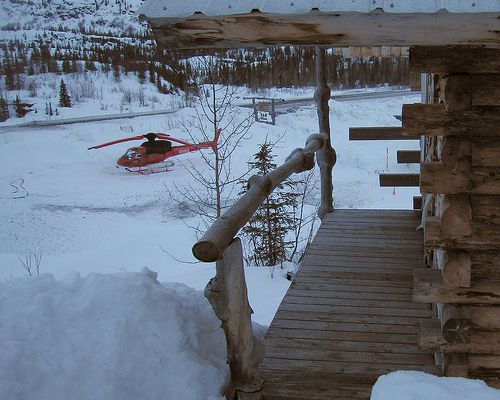
Suppose you are out skiing, and when you got off the lift, you mention to the person who rode up the lift with you that you plan to ski down to the lodge where you’re going to meet up with some friends for lunch. “No problem” this person replies, and suddenly he waves to a helicopter above, that upon his signal, swoops you up and speedily deposits you at the ski lodge. You protest vigorously, but the pilot is incredulous. He says, “What’s your beef, my friend? It was you who said the objective was to get from the summit down to the lodge!”
The helicopter pilot would have a point if getting to the lodge were the only issue. If it is, flying down the slope achieves exactly what skiing down achieves. Both have you start at the top and end up at the lodge. The helicopter even has notable advantages: you don’t get cold, or tired, or wet, for example.
There is only one problem with this. The goal of getting to the lodge was meant to structure the process of skiing. That process was the true “goal.”
You have to value “down” over “up” or you can’t do downhill skiing. Aiming at a specific goal (the lodge) allows you to “orienteer” one way to go down the hill. But the true goal is just to ski, not reaching the goal (the lodge).
In precisely the same way, the true goal of goals is to orient you toward your values so you can live a valued life, moment by moment. A successful ACT patient put it this way toward the end of therapy: “I just want to do this because that’s what I want my life to be about. It’s not really about any outcome. I want to be alive until I’m dead.” Goals can help you do exactly that. But be careful! Your mind will often claim that the true goal is the goal itself (after all, evaluating outcomes is what this organ evolved to do), and it will suggest that you should cut corners (like violate your integrity, or ignore other valued aspects of your life) to get there. That defeats the whole purpose, and if you succumb to cutting corners, accomplishing your goals will only mock you.
* In a series of posts I call mythology Monday, I look at quotes from the work of mythologist Joseph Campbell and consider them alongside extracts from books and papers on acceptance and commitment therapy (ACT) and related publications.
Our thoughts can be like a chess game, a constant battle between two sides. We could also choose not to always play those pieces and be the chessboard instead.
I set out the chess board. I filled a pipe, paraded the chessmen and inspected them for French shaves and loose buttons, and played a championship tournament game between Gortchakoff and Meninkin, seventy-two moves to a draw, a prize specimen of the irresistible force meeting the immovable object, a battle without armor, a war without blood, and as elaborate a waste of human intelligence as you could find anywhere outside an advertising agency.”
The Chessboard Metaphor, a central ACT intervention, connects the client to the distinction between content and the observing self:
Imagine a chessboard that goes out infinitely in all directions. It’s covered with black pieces and white pieces. They work together in teams, as in chess—the white pieces fight against the black pieces. You can think of your thoughts and feelings and beliefs as these pieces; they sort of hang out together in teams too. For example, “bad” feelings (like anxiety, depression, resentment) hang out with “bad” thoughts and “bad” memories. Same thing with the “good” ones. So it seems that the way the game is played is that we select the side we want to win. We put the “good” pieces (like thoughts that are self-confident, feelings of being in control, etc.) on one side, and the “bad” pieces on the other. Then we get up on the back of the black horse and ride to battle, fighting to win the war against anxiety, depression, thoughts about using drugs, whatever. It’s a war game. But there’s a logical problem here, and that is that from this posture huge portions of yourself are your own enemy. In other words, if you need to be in this war, there is something wrong with you. And because it appears that you’re on the same level as these pieces, they can be as big or even bigger than you are—even though these pieces are in you. So somehow, even though it is not logical, the more you fight the bigger they get. If it is true that “if you are not willing to have it, you’ve got it,” then as you fight these pieces they become more central to your life, more habitual, more dominating, and more linked to every area of living. The logical idea is that you will knock enough of them off the board that you eventually dominate them—except that your experience tells you that the exact opposite happens. Apparently, the white pieces can’t be deliberately knocked off the board. So the battle goes on. You feel hopeless, you have a sense that you can’t win, and yet you can’t stop fighting. If you’re on the back of that black horse, fighting is the only choice you have, because the white pieces seem life threatening. Yet living in a war zone is no way to live.
The fundamental text of the Hindu tradition is, of course, the Bhagavad Gītā; and the four basic yogas are described. The word yoga itself, from a Sanskrit verbal root yuj, meaning ‘to yoke, to link one thing to another,’ refers to the act of linking the mind to the source of mind, consciousness to the source of consciousness; the import of which definition is perhaps best illustrated in the discipline known as knowledge yoga, the yoga, that is to say, of discrimination between the knower and the known, between the subject and the object in every act of knowing, and the identification of oneself, then, with the subject. I know my body. My body is the object. I am the witness, the knower of the object. I, therefore, am not my body.’ Next: ‘I know my thoughts: I am not my thoughts.’ And so on: ‘I know my feelings, I am not my feelings.’ You can back yourself out of the room that way. And the Buddha then comes along and adds: ‘You are not the witness either. There is no witness.’ So where are you now? Where are you between two thoughts? That is the way known as jñāna yoga, the way of sheer knowledge.”
‘Recall something that happened last summer. Anything that comes to mind is fine. Remember what was happening then. Remember where you were and what was happening. See if you can see, hear, and smell, just as you did last summer. Don’t remember the scene as if you were someone else looking at the scene from the outside. Do it from inside the body of the person called “you” who was there, looking out from behind your eyes. Close your eyes and take a few moments to imagine this scene.
Now notice as you remember the scene that you were there. There was a person behind those eyes, just as there is now. And although many things have happened since last summer, notice too that there is an essential continuity between the part of you that is aware of what you are aware of now, and the part of you that was aware of what you were aware of back then. We call that person the “observer-self.”
* In a series of posts I call mythology Monday, I look at quotes from the work of mythologist Joseph Campbell and consider them alongside extracts from books and papers on acceptance and commitment therapy (ACT) and related publications.
Frustrated by rejection, new authors can feel like failures. Their feelings of impatience, even anxiety, can lead to bad career decisions. Or to even give up on their dream.
Frustrated newcomers can begin to do silly things to get the attention of publishing pros. A friend who edits romances for a major paperback publisher told me how at one conference an overeager author followed her into the ladies room—right into an empty stall—in order to pitch her manuscript. Did it work? No way!
Typically, authors express their anxiety in more subtle ways.
What is this anxiety really about? It can be experienced as the desperate feeling that no one in book publishing cares a damn about you or your manuscript. One can feel it as anger over slush piles (stacks of unrequested, waiting-to-be-read manuscripts), fury over long response times, frustration with uncaring editors or agents—one can even begin to resent the success of others. What began as bliss can turn to utter misery.
I would like to suggest that these overt signs of anxiety actually mask fears of a more fundamental sort. One is the fear of failure, the terrifying possibility that one has wasted years of one’s life. A second is the fear of humiliation—so many expectations to fulfill!
Especially one’s own!
Most fundamental of all, I believe, is the anxiety that derives from the need for validation. Above all things, writers want acceptance. They long to be judged worthy of publication. They want to be assured that they are not crazy. They need to know that all this time and effort have not been for nothing. If the breaking-in period becomes too lengthy or too frustrating, most writers will sooner or later get desperate. Some will start to avoid the whole process, refusing to push themselves. Others will keep at it doggedly but cynically, losing all excitement and hope.
That is too bad, because that kind of burnout can lead to ill-considered career decisions. And, these days, there is little room for error in the big, bad world of book publishing.
James, a single, 31-year-old Caucasian male, is an aspiring actor and screenwriter…It became clear during the initial treatment sessions that it was his dissatisfaction with the current state of his life that was most distressing for James. He was frustrated with the lack of progress in his career and was struggling with thoughts of not having accomplished enough to this point in his life and fears of being a “failure.”
Through a series of direct experiential exercises in session, James gradually became less emotionally reactive to the word “failure.” For example, when presented with the word “failure” written on a flash card, James reported wanting to rip up the card and throw it in the trash. The therapist then asked James whether he was willing to put the card in his lap, simply read it, let it be, and have the card touch him as a thought. James agreed and was surprised to notice that he could do this without getting tangled up in what the card says. He was also willing to take the card with him over the next week everywhere he went. In addition, James and his therapist did an exercise in which they rapidly repeated the word “failure” for approximately 30 seconds while observing what happens to the quality of the word when doing so. James reported that after saying the word repeatedly “failure” was reduced to merely a string of almost unrecognizable sounds and he could see that it was ultimately just a word.
Exercises such as this helped James to become a better observer of his own thinking and he learned that he does not have to take his thoughts, even historically difficult thoughts, so seriously and do what they say. For example, during the course of treatment James completed his screenplay and put together a team of actors to present his screenplay to an audience for the very first time, despite experiencing occasional thoughts of failing throughout the process.
We all adopt different masks depending on where we are and who we’re with. Behind them all is an individual who can observe each of the different roles we play.
To become—in Jung’s terms—individuated, to live as a released individual, one has to know how and when to put on and put off the masks of one’s various life roles. ‘When in Rome, do as the Romans do,’ and when at home, do not keep on the mask of the role you play in the Senate. But this, finally, is not easy, since some of the masks cut deep. They include judgement and moral values. They include one’s pride, ambition, and achievement. They include one’s infatuations. It is a common thing to be overly impressed by and attached to masks either some mask of one’s own or the mana-masks of others. The work of individuation, however, demands that one should not be compulsively affected in this way. The aim of individuation requires that one should find and then learn to live out of one’s own center, in control of one’s own for an against. And this cannot be achieved by enacting and responding to any general masquerade of fixed roles.”
‘The practice of personal development usually focuses on changing your thinking. You’re told to think positively, optimistically, bigger and differently; to let go of negative thoughts and think yourself happy. The belief is that if you change your thoughts you change yourself, implying that you are your thoughts. Mindfulness offers a different perspective. Note that the word ‘personal’ comes from the Latin persona, meaning ‘mask’ (referring to the masks actors used in theatre to represent different characters) and ‘development’ comes from the old French word desveloper, meaning ‘to unveil’. So, interestingly, personal development is about unveiling your mask to reveal your true self. You wear different masks every day: mother or father, husband or wife, teacher or writer, footballer or driver. But underneath all that is another dimension that’s easily missed – the fact that you’re able to observe all these different roles implies that you’re separate from them. We call this the observer self.’
* In a series of posts I call mythology Monday, I look at quotes from the work of mythologist Joseph Campbell and consider them alongside extracts from books and papers on acceptance and commitment therapy (ACT) and related publications.
The soil above the seed is hard to push through, but this very handicap, this resistance to the soil, forces the young sprout to gather strength for the battle. Where shall it get this additional strength? Instead of fighting ineffectively against the topsoil, the seed sends out delicate roots to gather more nourishment. Thus the sprout at last penetrates the hard soil and wins through to the sun. According to science, a single thistle needs ten thousand inches of root to support a thirty- or forty-inch stem. You can guess how many thousands of facts a dramatist must unearth to support a single character. By way of parable, let a man represent the soil; in his mind we shall plant a seed of coming conflict: ambition, perhaps. The seed grows in him, though he may wish to squelch it. But forces within and without the man exert greater and greater pressure, until this seed of conflict is strong enough to burst through his stubborn head. He has made a decision, and now he will act upon it. The contradictions within a man and the contradictions around him create a decision and a conflict. These in turn force him into a new decision and a new conflict.”
If your deepest beliefs drive your writing, they will not only keep your work from being contrived but will help you discover what drives your characters. You may find some really good people beneath the packaging and posing—people whom we, your readers, will like, whose company we will rejoice in. We like certain characters because they are good or decent—they internalize some decency in the world that makes them able to take a risk or make a sacrifice for someone else. They let us see that there is in fact some sort of moral compass still at work here, and that we, too, could travel by this compass if we so choose.”
‘Defining a valued direction produces a more consistent compass heading to direct action during the storms of life, when waves of emotion crash and the screaming minds of the wind blast. Anyone who has engaged in mindfulness meditation for any period of time is aware of how fickle and changeable emotions and thoughts can be. However, values tend not to change so rapidly over time. If the therapist can help clients describe their most basic values for their life, clients can contact a source of stability in an often-chaotic landscape of changing thoughts and feelings. Once clarified, stated, and committed to, values can be like a lighthouse, providing direction during dark psychological nights and story situations.’




























 thefictiontherapist.com