The bold and truly epoch-making writings of the psychoanalysts are indispensable to the student of mythology; for, whatever may be thought of the detailed and sometimes contradictory interpretations of specific cases and problems, Freud, Jung, and their followers have demonstrated irrefutably that the logic, the heroes, and the deeds of myth survive into modern times. In the absence of an effective general mythology, each of us has his private, unrecognized, rudimentary, yet secretly potent pantheon of dream. The latest incarnation of Oedipus, the continued romance of Beauty and the Beast, stand this afternoon on the corner of Forty-second Street and Fifth Avenue, waiting for the traffic light to change.” Joseph Campbell. The Hero with a Thousand Faces
‘As a human being, you are the central figure in the universal hero’s mythic journey, the fairy tale, the Arthurian quest. For men and women alike, this journey is the trajectory between birth and death, a human life lived. No one escapes the adventure. We only work with it differently.’ Jon Kabat-Zinn. Wherever You Go, There You Are: Mindfulness Meditation in Everyday Life
* In a series of posts I call mythology Monday, I look at quotes from the work of mythologist Joseph Campbell and consider them alongside extracts from books and papers on acceptance and commitment therapy (ACT) and related publications.
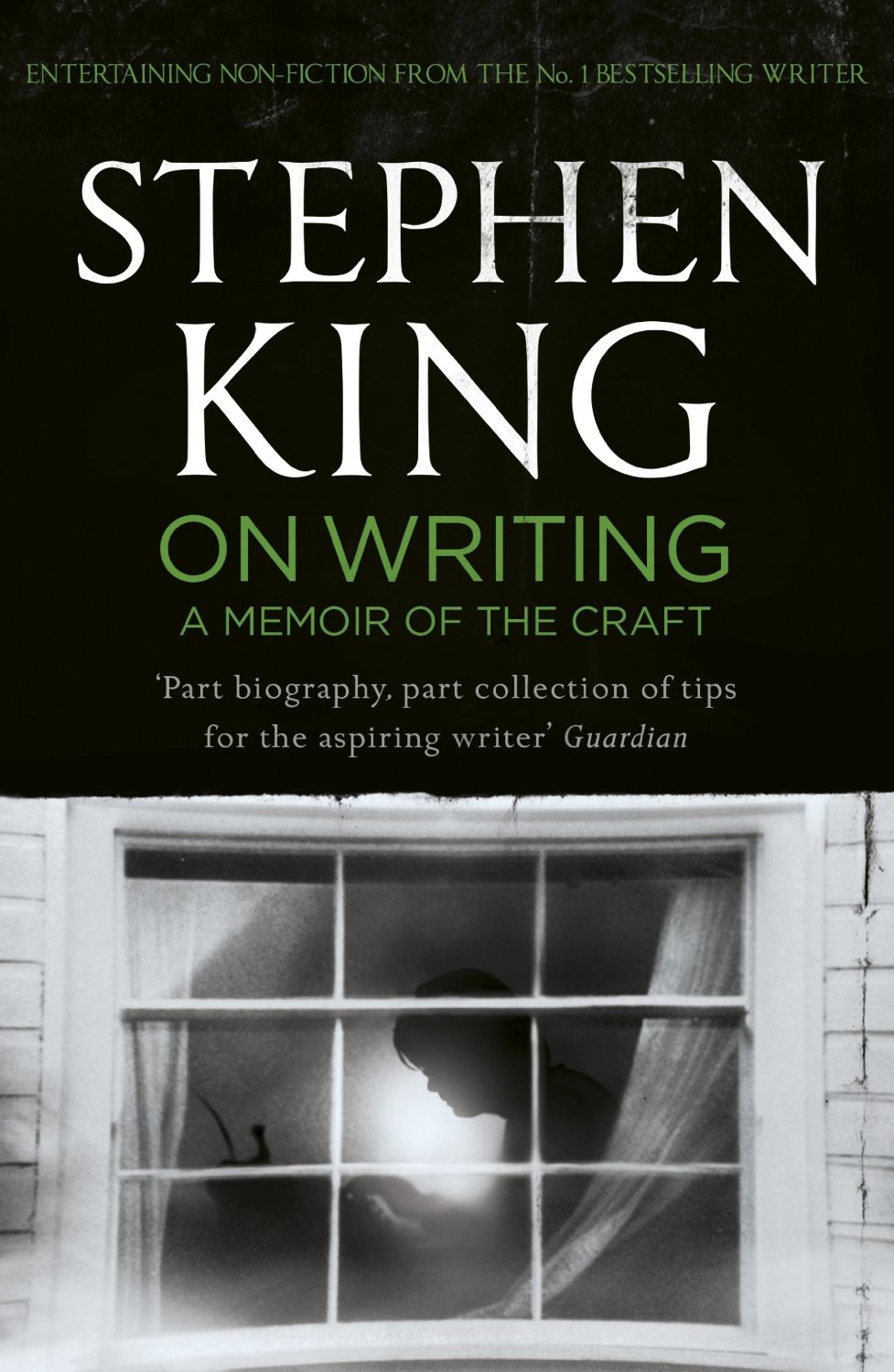
One of the first tasks of the writer, I have found, and not the easiest, is forgiveness: You must forgive yourself for writing crap first drafts. Perform whatever ritual of absolution you have to, pray to whatever cruel god or gods you have to, but do that for yourself. Only once you’ve forgiven yourself can you begin the serious work of writing, which isn’t writing at all. It’s revising.
‘Most clients have a hard time with forgiveness, because it sounds like a change in judgment or evaluation. It sounds like ‘I used to think you were wrong, but now I’ve changed my mind.’ Worse, it may appear to be equivalent to emotional avoidance: excusing, denying, or forgetting old angers and hurts. But the word forgive itself suggests a more positive way to approach this difficult topic: We can take it to mean ‘give that which came before’—literally, fore-giving. It means repairing what was lost. Gift comes from the Latin gratis, or free. In that sense, fore-giving is not earned: it is free. However, the gift of forgiveness is not a gift to someone else. Giving what went before is most particularly not a gift to the wrongdoer. It is a gift to oneself.’
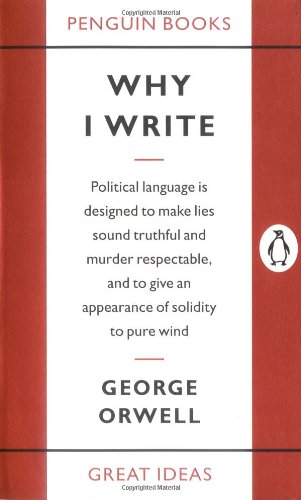
For fifteen years or more, I was carrying out a literary exercise of a quite different kind: this was the making up of a continuous “story” about myself, a sort of diary existing only in the mind. I believe this is a common habit of children and adolescents. As a very small child I used to imagine that I was, say, Robin Hood, and picture myself as the hero of thrilling adventures, but quite soon my “story” ceased to be narcissistic in a crude way and became more and more a mere description of what I was doing and the things I saw. For minutes at a time this kind of thing would be running through my head: “He pushed the door open and entered the room. A yellow beam of sunlight, filtering through the muslin curtains, slanted on to the table, where a match-box, half-open, lay beside the inkpot. With his right hand in his pocket he moved across to the window. Down in the street a tortoiseshell cat was chasing a dead leaf,” etc. etc. This habit continued until I was about twenty-five, right through my non-literary years. Although I had to search, and did search, for the right words, I seemed to be making this descriptive effort almost against my will, under a kind of compulsion from outside. The “story” must, I suppose, have reflected the styles of the various writers I admired at different ages, but so far as I remember it always had the same meticulous descriptive quality.
If you find yourself entangled in a “logical” but sad story about your life, and why things have to be the way they are, write down the normal story, then take all the descriptive facts and write the same exact facts into a different story. Repeat until you feel more open to new possibilities with your history.
Was Cathy from Wuthering Heights practising mindfulness all those years ago? Was she able to quietly reflect on her faults when people were critical of her?
At fifteen she was the queen of the country-side; she had no peer; and she did turn out a haughty, headstrong creature! I own I did not like her, after infancy was past; and I vexed her frequently by trying to bring down her arrogance: she never took an aversion to me, though.
Over the years, quite a few people have called me arrogant (especially my wife). I used to deny it, discount it, or counter-attack with a criticism about the other person (I won’t tell you what I called my wife). These days, I usually respond differently (alas, not always); I tend to pause, notice and reflect, considering whether there is something valid in the criticism; to look with openness and curiosity at the way I’ve been behaving. And if the criticism is valid, I consider: what’s working, what’s not working, and what could I do differently? Finally I (often, but not always) respond mindfully, acting on my values – which usually means apologizing for my arrogance and expressing myself more respectfully.
Lots of the people I meet on courses say that they’re waiting till their kids grow up, they’re waiting till they retire till they have time, and that’s when they’ll start their novel. My advice has been consistent for the twenty-odd years I’ve been teaching creative writing: don’t wait, there’s never a perfect time. Do it now.
‘As soon as you have to face any sort of challenge, your mind will come up with a whole list of reasons not to do it: ‘I’m too tired’, ‘It’s too hard’, ‘I’ll only fail’, ‘It’s too expensive’, ‘It’ll take too long’, ‘I’m too depressed’ etc. And that’s okay, as long as we see these reasons for what they are: excuses.’
Your thoughts and emotions are not the best guides. Discovering what truly matters to you – your values – will give you a more stable direction in life.
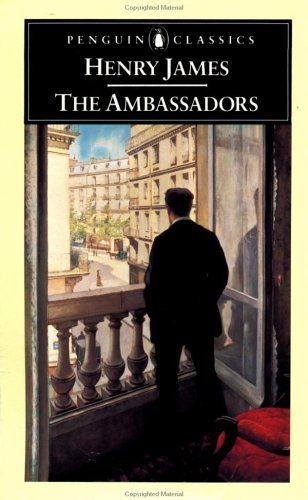
If ever a man had come off tired Lambert Strether was that man; and hadn’t it been distinctly on the ground of his fatigue that his wonderful friend at home had so felt for him and so contrived? It seemed to him somehow at these instants that, could he only maintain with sufficient firmness his grasp of that truth, it might become in a manner his compass and his helm.” Henry James. The Ambassadors
‘Thoughts about the past, emotions, bodily states, and the like are often very poor guides to action, especially when they are viewed in the contexts of literality, control, and reason giving. Chosen values provide a far more stable compass reading. This is true because thoughts and feelings often lead in contradictory directions, and they invite a focus on irrelevant process goals (e.g., getting rid of a certain feeling or having only certain thoughts). Values can motivate behavior even in the face of tremendous personal adversity.’
When it’s on target, a simile delights us in much the same way meeting an old friend in a crowd of strangers does. By comparing two seemingly unrelated objects—a restaurant bar and a cave, a mirror and a mirage—we are sometimes able to see an old thing in a new and vivid way. Even if the result is mere clarity instead of beauty, I think writer and reader are participating together in a kind of miracle. Maybe that’s drawing it a little strong, but yeah—it’s what I believe.’
‘Metaphors are not simply logical, linear forms of verbal behavior: they are more like pictures. The point of the ACT metaphors is often hard to capture in a simple moral or verbal conclusion. Instead, metaphors present a picture of how things work in a given domain. Carefully presented metaphors can be a kind of experiential exercise—as if one had actually experienced the described event or story. The event is verbal, and thus the experiences are derived and not direct, but the impact of the talk is still more experiential because the talk used is not linear, analytic, or proscriptive. This is advantageous inasmuch as ACT is attempting to ground client action in the direct experience of contingencies and in rules that track those contingencies. Metaphors help set a social/verbal context in which overreliance on rationality is questioned and where the wisdom of directly experienced contingencies is more highly valued.’
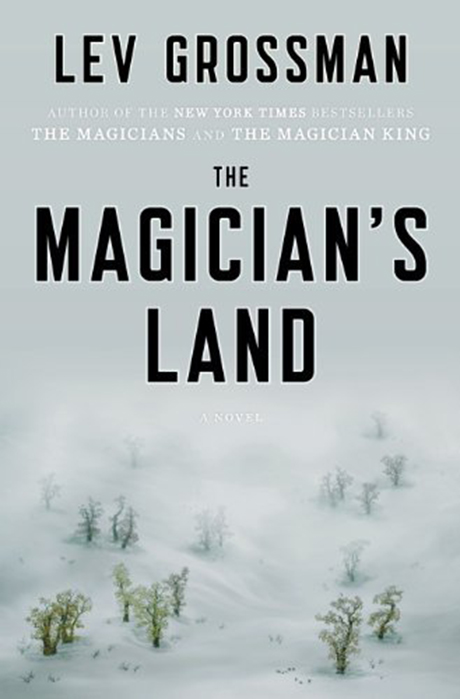
‘I had less and less control over my own history each day. I suppose I could have made some kind of effort. It should have been easy to trace: this happened, I was here, that happened next, all of which led inevitably to the present moment. I could have picked up a handful of dirt from the street outside, some wax from a candle on the altarpiece, ash from the incense as it swung past. I could have wrung it out, hoping I might find an essential thing that would give meaning to this place or that time. I did not. Certainty had surrendered all its territory in my mind. I’d have just been left with a mess in my hands anyway, no more. I realized, as I stood there in the church, that there was a sharp distinction between what was remembered, what was told, and what was true.’
‘Finding a way to transcend the content of thoughts and other internal events may be the most useful strategy for being able to start living life after surviving a traumatic experience. Because of the power of language, we know that initially you may start avoiding one or two things that remind you of your trauma, but, over time, a wider circle of events will start having the same impact on you. Chances are, you’ve already noticed this impact of an ever-widening circle of things that cannot happen, places that you can’t go, people you feel you shouldn’t see, or things you cannot talk about. Eventually, you may simply be wracked with tension and no longer able to trace it all the way back to the original trauma. That’s the impact of language: Events, including mental events such as thoughts and feelings, start having the same impact on you as the trauma itself.
‘Your life can become about something other than trying to get away from a big part of yourself: your memories, your feelings, your thoughts, your own bodily sensations—basically, the passengers on your bus. In ACT, instead of changing what you experience (thoughts, feelings, memories), we focus on changing how you experience them. If you can experience all aspects of yourself with awareness and without all the pitfalls associated with language, you can begin to move forward in ways that are consistent with values and goals in your life.’
For years and years I thought that stories were just practice, till I got time to write a novel. Then I found that they were all I could do, and so I faced that. I suppose that my trying to get so much into stories has been a compensation.’
‘By being with yourself … by watching yourself in your daily life with alert interest, with the intention to understand rather than to judge, in full acceptance of whatever may emerge, because it is there, you encourage the deep to come to the surface and enrich your life and consciousness with its captive energies. This is the great work of awareness; it removes obstacles and releases energies by understanding the nature of life and mind. Intelligence is the door to freedom and alert attention is the mother of intelligence.’



























 thefictiontherapist.com