Cognitive defusion techniques attempt to alter the undesirable functions of thoughts and other private events, rather than trying to alter their form, frequency or situational sensitivity.
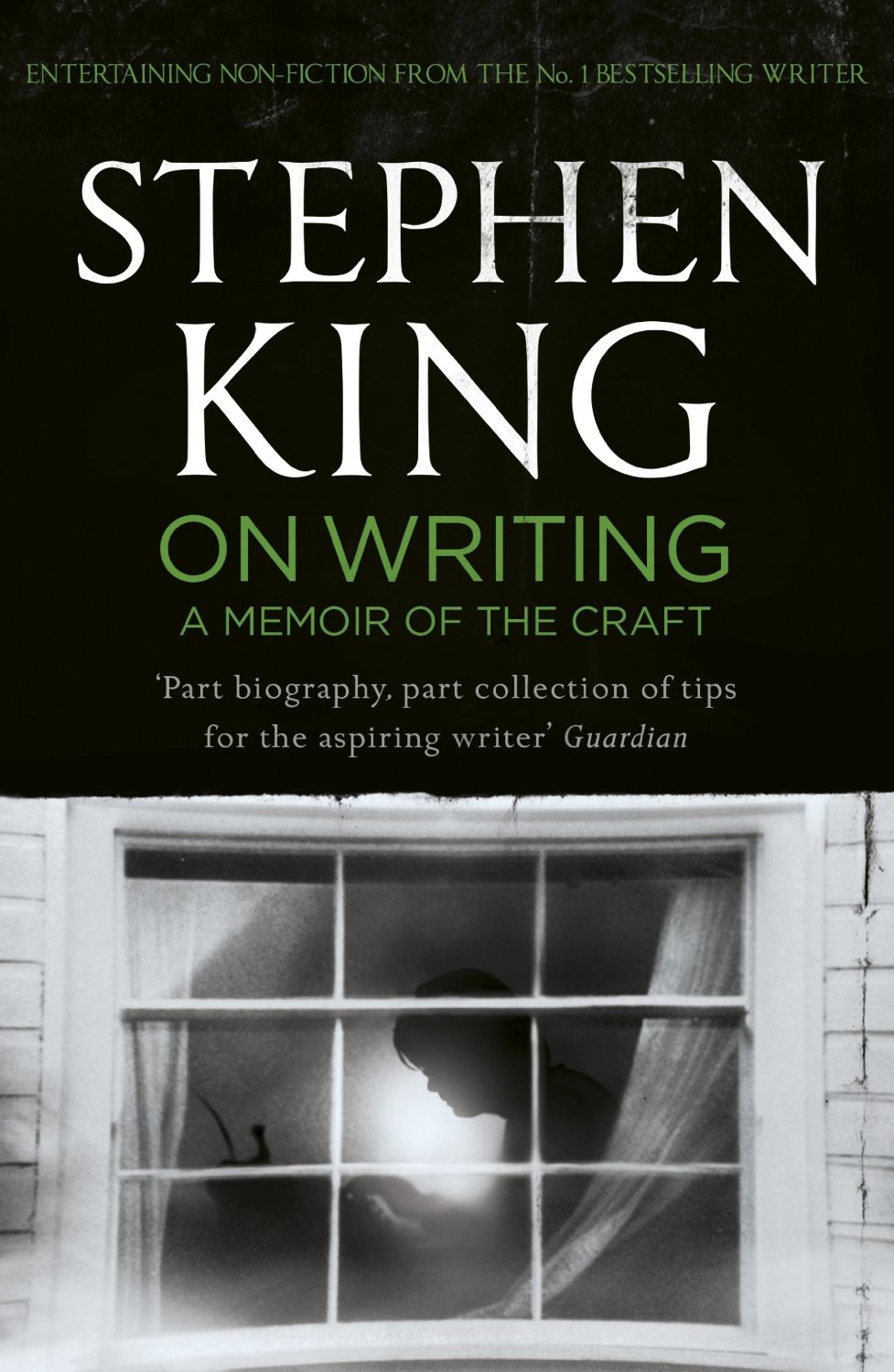
One of the first tasks of the writer, I have found, and not the easiest, is forgiveness: You must forgive yourself for writing crap first drafts. Perform whatever ritual of absolution you have to, pray to whatever cruel god or gods you have to, but do that for yourself. Only once you’ve forgiven yourself can you begin the serious work of writing, which isn’t writing at all. It’s revising.
‘Most clients have a hard time with forgiveness, because it sounds like a change in judgment or evaluation. It sounds like ‘I used to think you were wrong, but now I’ve changed my mind.’ Worse, it may appear to be equivalent to emotional avoidance: excusing, denying, or forgetting old angers and hurts. But the word forgive itself suggests a more positive way to approach this difficult topic: We can take it to mean ‘give that which came before’—literally, fore-giving. It means repairing what was lost. Gift comes from the Latin gratis, or free. In that sense, fore-giving is not earned: it is free. However, the gift of forgiveness is not a gift to someone else. Giving what went before is most particularly not a gift to the wrongdoer. It is a gift to oneself.’
Lots of the people I meet on courses say that they’re waiting till their kids grow up, they’re waiting till they retire till they have time, and that’s when they’ll start their novel. My advice has been consistent for the twenty-odd years I’ve been teaching creative writing: don’t wait, there’s never a perfect time. Do it now.
‘As soon as you have to face any sort of challenge, your mind will come up with a whole list of reasons not to do it: ‘I’m too tired’, ‘It’s too hard’, ‘I’ll only fail’, ‘It’s too expensive’, ‘It’ll take too long’, ‘I’m too depressed’ etc. And that’s okay, as long as we see these reasons for what they are: excuses.’
When it’s on target, a simile delights us in much the same way meeting an old friend in a crowd of strangers does. By comparing two seemingly unrelated objects—a restaurant bar and a cave, a mirror and a mirage—we are sometimes able to see an old thing in a new and vivid way. Even if the result is mere clarity instead of beauty, I think writer and reader are participating together in a kind of miracle. Maybe that’s drawing it a little strong, but yeah—it’s what I believe.’
‘Metaphors are not simply logical, linear forms of verbal behavior: they are more like pictures. The point of the ACT metaphors is often hard to capture in a simple moral or verbal conclusion. Instead, metaphors present a picture of how things work in a given domain. Carefully presented metaphors can be a kind of experiential exercise—as if one had actually experienced the described event or story. The event is verbal, and thus the experiences are derived and not direct, but the impact of the talk is still more experiential because the talk used is not linear, analytic, or proscriptive. This is advantageous inasmuch as ACT is attempting to ground client action in the direct experience of contingencies and in rules that track those contingencies. Metaphors help set a social/verbal context in which overreliance on rationality is questioned and where the wisdom of directly experienced contingencies is more highly valued.’
There is little to gain from carrying out a post-mortem on a situation, wondering if you should have done this or that, but try telling that to George Costanza.
George Costanza. From Seinfeld, season 8, episode 13 The Comeback.
‘Postmortem is when your mind rehashes or ruminates about what you think happened (or should have happened) in a social situation. Your “postmortem” review of a situation can last from seconds to hours, often “rearing its ugly head” from time to time long after you have left a situation. The following is an example of a “postmortem” review:
‘Oh no, I really screwed up that presentation. I should have prepared more. I can’t believe I made that stupid comment about finances. And I forgot to mention the plan I’ve been preparing. What an idiot! The boss sure had a disappointed look on her face. I bet she regrets promoting me. I’m going to get fired, and I’ll never get another job!’
Memory doesn’t record life like a video camera. Instead, it adds associated details and becomes, like Arthur C. Clarke said, ‘a story-telling machine’.
“What is human memory?” Manning asked. He gazed at the air as he spoke, as if lecturing an invisible audience – as perhaps he was. “It certainly is not a passive recording mechanism, like a digital disc or a tape. It is more like a story-telling machine. Sensory information is broken down into shards of perception, which are broken down again to be stored as memory fragments. And at night, as the body rests, these fragments are brought out from storage, reassembled and replayed. Each run-through etches them deeper into the brain’s neural structure. And each time a memory is rehearsed or recalled it is elaborated. We may add a little, lose a little, tinker with the logic, fill in sections that have faded, perhaps even conflate disparate events.
“In extreme cases, we refer to this as confabulation. The brain creates and recreates the past, producing, in the end, a version of events that may bear little resemblance to what actually occurred. To first order, I believe it’s true to say that everything I remember is false.”
‘Memory doesn’t store everything we perceive, but instead takes what we have seen or heard and associates it with what we already know. These associations help us to discern what is important and to recall details about what we’ve seen. They provide “retrieval cues” that make our memories more fluent. In most cases, such cues are helpful. But these associations can also lead us astray, precisely because they lead to an inflated sense of the precision of memory. We cannot easily distinguish between what we recall verbatim and what we construct based on associations and knowledge.’
We have to make choices in life, and we learn from acceptance and commitment therapy that the freedom to choose is liberating. The failure to choose, says poet Diane Wakoski, is greed.
But pick and choose.
Robot or Man. Machine- or hand-made,
You cannot have both.
Greed, I keep reminding you,
is the failure to choose. The unwillingness to pick one thing over
another. Wealth or simplicity; you cannot have both.
‘Life is hard. Life is also many other things. Ultimately your life is what you choose to make it. When the word-machine dominates, life works one way. When the verbal evaluative side of you is but one source of input, life works differently. The choices themselves aren’t always easy, but finding the freedom to choose is a liberating experience. It’s your life. It is not the word-machine’s—even though (of course) it tells you otherwise.’
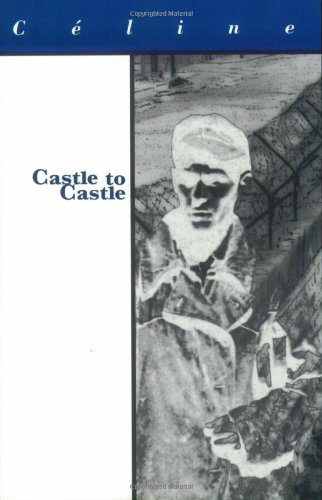
French author, Céline, experiences his own version of the famous ‘passengers on the bus’ metaphor used in acceptance and commitment therapy.
When I think of the people I hear talking politics, I can see them in a bus…a real bus! with real gratings, jam-pcked with criminals like you!…not criminals à la Charlie Chaplin! honest to God criminals with handguns and straitjackets! guarded by a dozen Tommy guns…what a show!…the passersby weave and waver, cling to the shopfronts…for fear this might happen to them…their consciences quake! scared shitless!…memories…it’s a rare passerby that hasn’t got a little abortion tucked away…a little theft…nothing to be ashamed of! the only thing to be ashamed of is poverty! the one and only! Take me, for instance, no car, a doctor on foot! what do I look like?…’
‘The bus metaphor casts the relationship between a person and thoughts or feelings the way one might cast a social relationship between a person and bullies. This reframe is useful as a motivative augmental in seeking freedom from literal language. Some of our past efforts to gain social independence can be used to stimulate a similar independence from the hegemony of our own verbal systems: our own minds. However limited our social independence is, independence from our minds is usually much less. This makes sense in another way inasmuch as the source of verbal relations, after all, is dominantly social and external in any case (What are the numbers?). The bus metaphor also nicely structures how the illusion of language works and what the cost is in terms of loss of life direction.’
How our own thoughts of failure can lead to a self-fulfilling prophesy.
Your teacher did not want to be a teacher. He wanted to be a meter reader at the electric utility. Meter readers do not have to put up with children, work comparatively little. And what is more important, have greater opportunity for corruption and are hence both better off and held in higher regard by society. Nor was becoming a meter reader out of your teachers reach. His uncle worked for the electric utility. But the one position as meter reader this uncle was able to facilitate went, as all things most desirable in life invariably went, to your teacher s elder brother.
So your teacher, who narrowly failed his secondary school final examination but was able to have the results falsified, and with his false results, a bribe equivalent to sixty percent of one years prospective salary, and a good low-level connection in the education bureaucracy in the form of a cousin, secured only the post he currently occupies. He is not exactly a man who lives to teach. In fact he hates to teach. It shames him. Nonetheless he retains a small but not non-existent fear of losing his job, of somehow being found out, or if not losing his job then at least being put in a position where he will be forced to pay yet another, and indeed larger bribe in order to retain it, and this fear, augmented by his sense of abiding disappointment and his not unfounded conviction that the world is profoundly unfair, manifests itself in the steady dose of violence he visits upon his charges. With each blow, he tells himself, he helps education penetrate another thick skull.’
‘Narrative therapy listens to the ways in which people tell their story or, in other words, construct narratives about themselves and the lives they live. Even the simplest narratives have underlying principles of construction: in telling a friend about what I did at the weekend, I make decisions, often without being fully aware of it, about what I should include and what I should leave out, which aspects I emphasise, the effect that I want the story to have on the listener.
‘Like certain habits of thinking, narrative constructions become habitual and automatic. To take a simple example: suppose during my life I have done a number of things that I consider to be failures, then I might start to see my life as a story about failure. I begin to give more emphasis to moments of failure and less to those times when I succeeded or when success and failure were not important. I start to see myself as a failure and I come to expect that what I do in the future will also fail. The narrative that I have constructed as a way of understanding my experience becomes a self-fulfilling prophecy.’











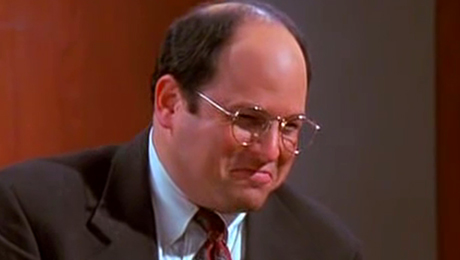
 , season 8, episode 13 The Comeback.













 thefictiontherapist.com