

Myths and metaphors reveal all

Metaphors, like myths, stimulate feelings and thoughts that the mind can comprehend, clarifying concepts that would otherwise be difficult to understand.

Metaphors, like myths, stimulate feelings and thoughts that the mind can comprehend, clarifying concepts that would otherwise be difficult to understand.
photo credit: h.koppdelaney via photopin cc

‘To grasp the full value of the mythological figures that have come down to us, we must understand that they are not only symptoms of the unconscious (as indeed are all human thoughts and acts) but also controlled and intended statements of certain spiritual principles, which have remained as constant throughout the course of human history as the form and nervous structure of the human physique itself. Briefly formulated, the universal doctrine teaches that all the visible structures of the world—all things and beings—are the effects of a ubiquitous power out of which they rise, which supports and fills them during the period of their manifestation, and back into which they must ultimately dissolve.

The apprehension of the source of this undifferentiated yet everywhere particularized substratum of being is rendered frustrate by the very organs through which the apprehension must be accomplished. The forms of sensibility and the categories of human thought, which are themselves manifestations of this power, so confine the mind that it is normally impossible not only to see, but even to conceive, beyond the colorful, fluid, infinitely various and bewildering phenomenal spectacle. The function of ritual and myth is to make possible, and then to facilitate, the jump—by analogy. Forms and conceptions that the mind and its senses can comprehend are presented and arranged in such a way as to suggest a truth or openness beyond.’

Joseph Campbell. The Hero with a Thousand Faces

Metaphors make abstract concepts concrete by providing a rich verbal context that evokes thoughts, feelings, and behaviors similar to those evoked by the client’s actual situation.

The story-like quality of metaphors has the advantage of providing instructive lessons that are rich in emotional and perceptual detail, mimicking direct contact with the environment and making the experience more memorable. Metaphors create a verbal world where clients can explore new behaviors and discover the contingencies for themselves, circumventing the potential traps of learning by rules. Metaphors also draw attention to salient features of a situation that may go unnoticed in clients’ real-world environment, thus liberating them from the cage built by language.

Matthieu Villatte, Jennifer L. Villatte and Jean-Louis Monestès, in The Big Book of ACT Metaphors. A Practitioner’s Guide to Experiential Exercises & Metaphors in Acceptance & Commitment Therapy. (Jill A. Stoddard and Niloofar Afari (eds.).


* In a series of posts I call mythology Monday, I look at quotes from the work of mythologist Joseph Campbell and consider them alongside extracts from books and papers on acceptance and commitment therapy (ACT) and related publications.
Creativity in hopelessness

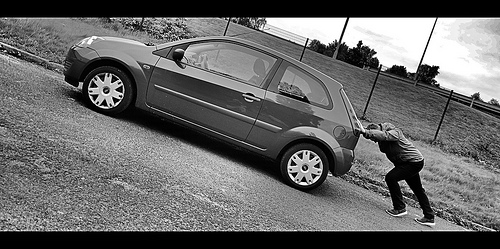
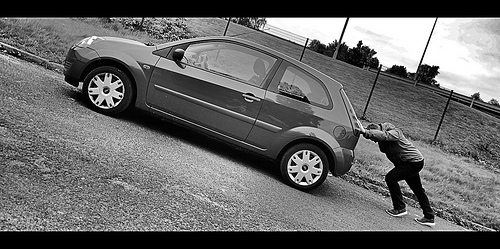
When you feel have tried everything, and yet still cannot solve your problem, that is the moment when you can get creative and find solutions where you thought there were none.

Hopelessness in this case doesn’t mean despair; it is creative hopelessness because it allows for new things to emerge.
photo credit: CJS*64 via photopin cc

‘This one thing I have done well, this I like, this I must praise, that there is now an end to that hatred against myself, to that foolish and dreary life! I praise you, Siddhartha, after so many years of foolishness, you have once again had an idea, have done something, have heard the bird in your chest singing and have followed it!

‘Thus he praised himself, found joy in himself, listened curiously to his stomach, which was rumbling with hunger. He had now, so he felt, in these recent times and days, completely tasted and spit out, devoured up to the point of desperation and death, a piece of suffering, a piece of misery. Like this, it was good. For much longer, he could have stayed with Kamaswami, made money, wasted money, filled his stomach, and let his soul die of thirst; for much longer he could have lived in this soft, well upholstered hell, if this had not happened: the moment of complete hopelessness and despair, that most extreme moment, when he hang over the rushing waters and was ready to destroy himself. That he had felt this despair, this deep disgust, and that he had not succumbed to it, that the bird, the joyful source and voice in him was still alive after all, this was why he felt joy, this was why he laughed, this was why his face was smiling brightly under his hair which had turned gray.’

Herman Hesse. Siddharta.

In common, everyday language, hopelessness is not an acceptable state of mind. Therapists often work hard to counter feelings of hopelessness and to instill optimism about the future. However, seeing a hopeless situation as hopeless is not a bad thing. If the client can give up on what hasn’t been working, maybe there is something else to do. Thus, in this phase of ACT, the therapist tries to help the client face hopelessness, but as a kind of creative act. The goal is not to elicit a feeling of hopelessness or a belief in hopelessness; instead, the objective is to engender a posture of giving up strategies when giving up is called for in the service of larger goals, even if what comes next is not known. When a client is caught in a self-defeating struggle, it is important to acknowledge it. Hopelessness in this case doesn’t mean despair; it is creative hopelessness because it allows for new things to emerge.

Steven C. Hayes, Kirk D. Strosahl and Kelly G. Wilson. Acceptance and Commitment Therapy: An Experiential Approach to Behavior Change.

Remain in the moment

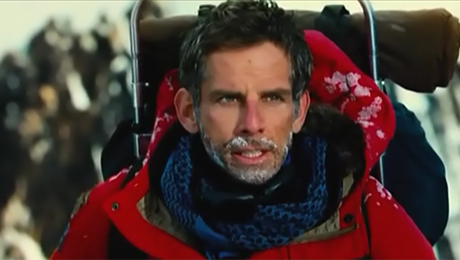
We are all capable of living in Walter Mitty type worlds, of placing too much importance on what is going on in the mind rather than taking time to experience what is really happening in this moment.

The premise that we live in a constructed “virtual world” of our own making is of fundamental importance in mindfulness based stress reduction. Formal mindfulness techniques (body scan, sitting meditation, Hatha Yoga) are contextualized by statements such “everyone’s experience will be different and unique,” and a de-emphasis on generic goals such as relaxation or insight. Instead, the importance of “just noticing” events in the moment-by-moment flow of experience is emphasized, without trying to make anything in particular happen. Non-judgmental awareness is at the core of mindfulness practice, emphasizing clarity of perception and freedom from cognitive preconceptions.’

James D. Herbert and Evan M. Forman (eds.). Acceptance and Mindfulness in Cognitive Behavior Therapy: Understanding and Applying the New Therapies.

Where psychology meets mythology

Symbols, metaphors and myths help us understand complex ideas, and psychologists can use them to help us heal or unravel their meaning when there is confusion.

Where psychology meets mythology
photo credit: kevincollins123 via photopin cc

‘Mythology is psychology misread as biography, history, and cosmology. The modern psychologist can translate it back to its proper denotations and thus rescue for the contemporary world a rich and eloquent document of the profoundest depths of human character. Exhibited here, as in a fluoroscope, stand revealed the hidden processes of the enigma Homo sapiens—Occidental and Oriental, primitive and civilized, contemporary and archaic. The entire spectacle is before us. We have only to read it, study its constant patterns, analyze its variations, and therewith come to an understanding of the deep forces that have shaped man’s destiny and must continue to determine both our private and our public lives.’

Joseph Campbell. The Hero with a Thousand Faces

As this tribal species called human beings learned to use symbols, the capacity for reason, problem solving, and imagination grew. We added new cognitive relations. Cultural development began with a vengeance.

The accelerator in that process was metaphor. Through metaphor, we could take an existing network of knowledge, the vehicle, and bring it to bear on a new domain, the target. If the vehicle contained relations and functions that were missing in the target, and if the link between the two was apt, entire networks of knowledge could be transferred to new areas in the length of time it took to tell a story or draw an analogy.

With that new process in hand, we had the cognitive tool we needed to transform human life. We could construct subtle differences, or extend similar forms.

The importance of this process to human knowledge and human development is revealed in the ubiquity of frozen metaphors, such as those I have just described. But it is also revealed in how extensively we use stories and metaphors within education and in psychotherapy.

Good psychotherapists are good storytellers. They know how to open clients up to what is truly new by using knowledge that is old. They know how to create experiences that inform and heal.

Jill A. Stoddard and Niloofar Afari. The Big Book of ACT Metaphors. A Practitioner’s Guide to Experiential Exercises & Metaphors in Acceptance & Commitment Therapy


* In a series of posts I call mythology Monday, I look at quotes from the work of mythologist Joseph Campbell and consider them alongside extracts from books and papers on acceptance and commitment therapy (ACT) and related publications.
Going back home

Some heroes are reluctant to go back to their old world after a dramatic life experience, while such a return can benefit both them and their society.

going back home
photo credit: The National Guard via photopin cc

‘The first problem of the returning hero is to accept as real, after an experience of the soul-satisfying vision of fulfillment, the passing joys and sorrows, banalities and noisy obscenities of life. Why re-enter such a world? Why attempt to make plausible, or even interesting, to men and women consumed with passion, the experience of transcendental bliss”? As dreams that were momentous by night may seem simply silly in the light of day, so the poet and the prophet can discover themselves playing the idiot before a jury of sober eyes. The easy thing is to commit the whole community to the devil and retire again into the heavenly rock-dwelling, close the door, and make it fast. But if some spiritual obstetrician has meanwhile drawn the shimenawa across the retreat, then the work of representing eternity in time, and perceiving in time eternity, cannot be avoided.’

Joseph Campbell. The Hero with a Thousand Faces

People who have survived dangerous environments have sometimes reported that they are hyperaware of everything around them. This acute sensitivity to the environment may have served a useful function at some time. For example, combat veterans may have been very sensitive to small sounds in order to stay alert for danger. But now they might use this sort of vigilance in everyday, noncombat situations … This can be an interesting sort of paradox in that many combat veterans we have talked with report that they never felt more alive than they did while in country. We want you to look at how that hyperawareness functions now in your life.

This acute awareness of everything is not what we mean by being mindful. In fact this is a kind of hyperarousal that happens in extreme stress and can be very hard on you, both psychologically and physically … For instance, if you interpret every small creak your house makes at night as a sign of danger, you’re not likely to get much sleep … Physically, we know that staying in a state of extreme stress and arousal can cause all types of health problems over time, including heart disease, high blood pressure, and other stress-related illness.

Victoria M. Follette and Jacqueline Pistorello. Finding Life Beyond Trauma: Using Acceptance and Commitment Therapy to Heal from Post-Traumatic Stress and Trauma-Related Problems.


* In a series of posts I call mythology Monday, I look at quotes from the work of mythologist Joseph Campbell and consider them alongside extracts from books and papers on acceptance and commitment therapy (ACT) and related publications.
The perfect personality

The best stories describe a character’s struggle to overcome the flaws in their personality. In reality, perfection doesn’t have to be so difficult to achieve.

The perfect personality
photo credit: celinecelines via photopin cc

‘In most modern stories it is the Hero’s personality that is being recreated or restored to wholeness. The missing piece may be a critical element of personality such as the ability to love or trust. Heroes may have to overcome some problem such as lack of patience or decisiveness. Audiences love watching Heroes grapple with personality problems and overcome them. Will Edward, the rich but cold-hearted businessman of Pretty Woman, warm up under the influence of the life-loving Vivian and become her Prince Charming? Will Vivian gain some self-respect and escape her life of prostitution? Will Conrad, the guilt-ridden teenager in Ordinary People, regain his lost ability to accept love and intimacy?’

Christopher Vogler. The Writer’s Journey.

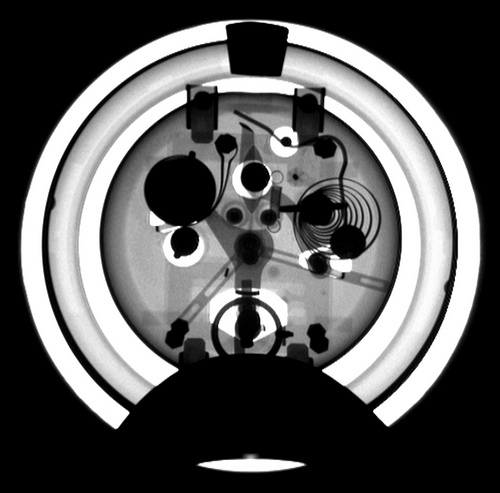
It can be worthwhile to tell the client about the etymology of perfect. The first part of the word (per) comes from a term that means “thoroughly.” Fect comes from the same root as the word factory and means “made.” In normal language, wholeness and perfection seem to be issues of evaluation. If to be perfect is to be thoroughly made, perhaps perfection is more a matter of presence or wholeness. The idea “I am missing something” also comes in a moment that is always absolutely whole. No second contains more life than any other second, even the seconds that are filled with thoughts of how incomplete we are. The experience of that very thought can be complete.’

Steven C. Hayes, Kirk D. Strosahl, Kelly G. Wilson. Acceptance and Commitment Therapy: An Experiential Approach to Behavior Change.

Overcome the pressure to conform

Even great mythical heroes could feel forced to conform to society’s wishes. Under this kind of pressure, it’s important to stick to your own values and do what you feel is right.

Overcome the pressure to conform
photo credit: Charos Pix via photopin cc

The hero may have to be brought back from his supernatural adventure by assistance from without. That is to say, the world may have to come and get him. For the bliss of the deep abode is not lightly abandoned in favor of the self-scattering of the wakened state. “Who having cast off the world,” we read, “would desire to return again? He would be only there.” And yet, in so far as one is alive, life will call. Society is jealous of those who remain away from it, and will come knocking at the door.’
Joseph Campbell
. The Hero with a Thousand Faces

‘Morals are social conventions about what is good; values are personal choices about desirable ends. To be maximally effective, the ACT therapist must be able to work sincerely with the client. Some clients enter therapy with histories or current problems that are morally repugnant to the therapist, such as battering, addiction, repetitious suicidal behavior, and so on. Values clarification work often exposes these areas, yet the ACT therapist cannot be drawn into the role of “moral detective,” using the social influence of therapy to openly or implicitly coerce the client into conforming to broadly held social values. The therapist makes the same move the client is asked to make, namely, to see valuing as essentially a personal exercise.’

Steven C. Hayes, Kirk D. Strosahl and Kelly G. Wilson. Acceptance and Commitment Therapy: An Experiential Approach to Behavior Change.


* In a series of posts I call mythology Monday, I look at quotes from the work of mythologist Joseph Campbell and consider them alongside extracts from books and papers on acceptance and commitment therapy (ACT) and related publications.
What happens next?

We act based on our experience, on our expectation of what might happen next. It is only when we take action, though, that we finally know the truth of what actually happens.

What happens next
photo credit: thriol via photopin cc

We believe we’re free to make any decision whatsoever to take any action whatsoever. But every choice and action we make and take, spontaneous or deliberate, is rooted in the sum total of our experience, in what has happened to us in actuality, imagination, or dream to that moment. We then choose to act based on what this gathering of life tells us will be the probable reaction from our world. It’s only then, when we take action, that we discover necessity.

Necessity is absolute truth. Necessity is what in fact happens when we act. This truth is known and can only be known—when we take action into the depth and breadth of our world and brave its reaction. This reaction is the truth of our existence at that precise moment, no matter what we believed the moment before. Necessity is what must and does actually happen, as opposed to probability, which is what we hope or expect to happen.

Robert McKee. Story: Style, Structure, Substance, and the Principles of Screenwriting

‘Until one is committed, there is hesitancy, the chance to draw back, always ineffectiveness. Concerning all acts of initiative there is one elementary truth the ignorance of which kills countless ideas and endless plans: That the moment one definitely commits oneself then providence moves, too. All sorts of things occur to help one that would never have otherwise occurred. A whole stream of events issues from the decision, raising in one’s favor all manner of unforeseen incidents and meetings and material assistance which no man could have dreamed would come his way. Whatever you can do or dream you can, begin it! Boldness has genius, power, and magic in it.’

W.H. Murray (partially quoting Johann Wolfgang von Goethe) The Scottish Himalayan Expedition 1951. Cited in: Get out of Your Mind and into Your Life: The New Acceptance and Commitment Therapy by Steven Hayes and Spencer Smith.

Leave the battle behind

As we struggle to overcome the realities of life, myths can show us that it is often better to leave the battlefield rather than continue to fight.

Leave the battle behind
photo credit: fauxto_digit via photopin cc

The battlefield is symbolic of the field of life, where every creature lives on the death of another. A realization of the inevitable guilt of life may so sicken the heart that, like Hamlet or like Arjuna, one may refuse to go on with it. On the other hand, like most of the rest of us, one may invent a false, finally unjustified, image of oneself as an exceptional phenomenon in the world, not guilty as others are, but justified in one’s inevitable sinning because one represents the good. Such self-righteousness leads to a misunderstanding, not only of oneself but of the nature of both man and the cosmos. The goal of the myth is to dispel the need for such life ignorance by effecting a reconciliation of the individual consciousness with the universal will. And this is effected through a realization of the true relationship of the passing phenomena of time to the imperishable life that lives and dies in all.’

Joseph Campbell. The Hero with a Thousand Faces

‘Metaphorically, the distinction between the function of a psychological disorder and the form it takes in one’s life can be likened to someone standing in a battlefield fighting a war. The war is not going well. The person fights harder and harder. Losing is a devastating option; but unless the war is won, the person fighting it thinks that living a worthwhile life will be impossible. So the war goes on.

Unknown to that person, however, is the fact that, at any time, he or she can quit the battlefield and begin to live life now. The war may still go on, and the battlefield may still be visible. The terrain may look very much as it did while the fighting was happening. But the outcome of the war is no longer very important and the seemingly logical sequence of having to win the war before beginning to really live has been abandoned.’

Steven C. Hayes and Spencer Smith. Get Out of Your Mind and into Your Life: The New Acceptance and Commitment Therapy.


* In a series of posts I call mythology Monday, I look at quotes from the work of mythologist Joseph Campbell and consider them alongside extracts from books and papers on acceptance and commitment therapy (ACT) and related publications.