In the late 1700s, Scottish poet, Robert Burns, believed an ability to see ourselves as others see us would free us from ‘blunders’ and ‘foolish notions’. Observing your ‘self’ can certainly offer some freedom from the harmful stories you can tell yourself.
O wad some Power the giftie gie us
To see oursels as others see us!
It wad frae monie a blunder free us
An’ foolish notions;
What airs in dress an’ gait and wad lea’e us,
And ev’n devotion.
Robert Burns. To a Louse, on seeing one in a lady’s bonnet, at church.
‘Self-as- context refers to a sense of self that transcends the content of one’s experiences. In other words, there is a “you” that is observing and experiencing your inner and outer world and is also distinct from your thoughts, feelings, physical sensations, and roles. From this perspective, you are not your thoughts and feelings; rather, you are the context or arena in which they unfold. When we’re stuck viewing ourselves from a self-as-content perspective, on the other hand, we tend to be driven by the scripts we have about ourselves, our lives, and our histories.’
Jill A. Stoddard and Niloofar Afari. The Big Book of ACT Metaphors. A Practitioner’s Guide to Experiential Exercises & Metaphors in Acceptance & Commitment Therapy
Take time to observe your thoughts, to listen to them and watch them as they pass by. Try not to get caught up in them, or let them pull you away into their stream.
He began to pay careful attention to his thoughts and ideas, and to admire them. For example, it occurred to him that if he were to die, the world in which he had been living would cease to exist. At first, this thought just flashed through his mind, but aware now of his inner originality, he did not let the thought escape as so many other ideas had done earlier. He grasped it, observed it, examined it from all sides.
He was walking along the river; now and again he would close his eyes and ask himself whether the river existed even when his eyes were closed. Of course, every time he opened his eyes the river continued to flow before him, but the remarkable thing was that this in no way proved it was there when Jaromil was not looking at it. This seemed extremely interesting to him, he spent the better part of a day on this experiment and then told Maman all about it.’
Milan Kundera. Life is Elsewhere. Translated by Peter Kussi.
‘As you observe thoughts or feelings, you’re separate from them in a sense, because you’re watching them. It’s like sitting on a riverbank as the water rushes by rather than being in the river itself. As you watch the water (emotion or thought) pass by, you may sometimes feel like you’ve been sucked into the river and washed downstream. But you’re not the river itself. You can simply step back out of the river again. De-centring is an important aspect of mindfulness.’
Shamash Alidina and Joelle Jane Marshall. Mindfulness Workbook for Dummies.
Despite his reputation as a rogue, Ernest Hemingway advocated mindful techniques for writing and for living, and he offers good advice on how to be considerate to others.
When people talk listen completely. Donʼt be thinking what youʼre going to say. Most people never listen. Nor do they observe. You should be able to go into a room and when you come out know everything that you saw there and not only that. If that room gave you any feeling you should know exactly what it was that gave you that feeling. Try that for practice. When youʼre in town stand outside the theatre and see how people differ in the way they get out of taxis or motor cars. There are a thousand ways to practice. And always think of other people.’
‘With mindful attention, we bring a nonjudging, open attitude to our experience. We also refer to this way of relating to feelings and thoughts as acceptance, defined as opening to up and allowing your experience to be exactly as it is, without trying to avoid it, escape it or change it.’
Jan E. Fleming and Nancy L. Kocovski. The Mindfulness and Acceptance Workbook for Social Anxiety and Shyness – Using Acceptance and Commitment Therapy to Free Yourself from Fear and Reclaim Your Life.
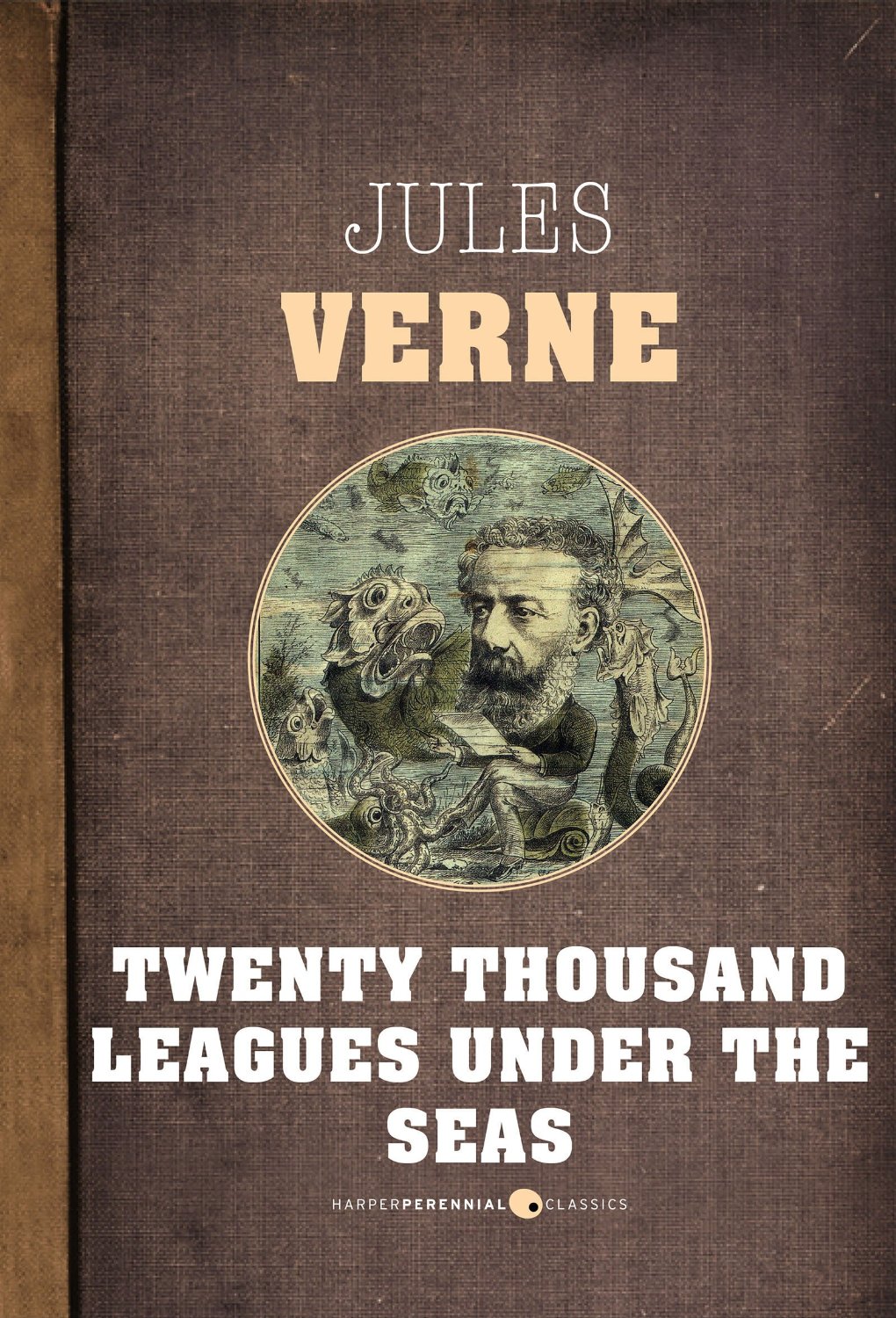
Jules Verne (died this day 1905) knew that it doesn’t help to anticipate problems or dangers. It is much better to remain in the moment, stay calm, and only deal with the problem if it actually arises.
Meanwhile, Ned Land gave free vent to his indignation.
‘Confound it!’ cried he, ‘here are people who come up to the Scotch for hospitality. They only just miss being cannibals. I should not be surprised at it, but I declare that they shall not eat me without my protesting.’
‘Calm yourself, friend Ned, calm yourself,’ replied Conseil, quietly. ‘Do not cry out before you are hurt. We are not quite done for yet.’
‘Not quite,’ sharply replied the Canadian, ‘but pretty near, at all events. Things look black. Happily, my bowie-knife I have still, and I can always see well enough to use it. The first of these pirates who lays a hand on me – ‘
‘Do not excite yourself, Ned,’ I said to the harpooner, ‘and do not compromise us by useless violence. Who knows that they will not listen to us? Let us rather try to find out where we are.’
‘If you find yourself anticipating distress, calculating your escape … your anxious thoughts will intensify. When this happens, try to stay in the now, and your panicky thoughts will settle down. Do what you can to return your focus to your immediate surroundings and your breath. You may notice people having a conversation nearby, or the texture of the carpet, or the colors in a poster.’
Sometimes, when life gets a little too ‘soap opera’, it can be useful to step back and observe your thoughts and emotions.
At this point, how my life starts to feel is like I’m acting in a soap opera being watched by people on a soap opera being watched by people on a soap opera being watched by real people, somewhere.
‘Once you’re relaxed, imagine yourself sitting in a movie theater. This is your own private theater. It’s safe and no one else is in it. You’re sitting several rows back from the screen, and it’s comfortably dark. Up on the screen you begin to see the thoughts, emotions, memories, and sensations that pass through your awareness.
Just sit and watch. Don’t follow any particular thought or emotion into the screen, just as you wouldn’t try to jump into the screen during a movie. Just watch without judgment, reaction, or distraction
As you observe your big deal mind, simply take note of what it presents; simply watch and name. Notice which thoughts have a pull on your attention and emotions. And also note any physical sensations you experience. Stay with this for a few minutes before moving on to the next part of the practice.
Now imagine that there’s another ‘you’ in this theater, sitting all the way in the back of the theater, in the very last row directly behind the first you. This second you is just sitting there watching the you up front, who is still just watching the screen.
Stay with this for a few minutes and notice what happens, paying particular attention to your emotional, physical, and mental reactions.
Now imagine that there is a third you, standing back the door of the theater. This third you is simply watching the second you, seated in the back row of the theater, who is still watching the you in the front, who is still watching all that is passing across the screen.’
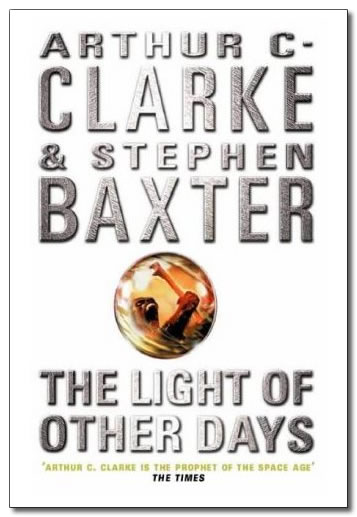
Memory doesn’t record life like a video camera. Instead, it adds associated details and becomes, like Arthur C. Clarke said, ‘a story-telling machine’.
“What is human memory?” Manning asked. He gazed at the air as he spoke, as if lecturing an invisible audience – as perhaps he was. “It certainly is not a passive recording mechanism, like a digital disc or a tape. It is more like a story-telling machine. Sensory information is broken down into shards of perception, which are broken down again to be stored as memory fragments. And at night, as the body rests, these fragments are brought out from storage, reassembled and replayed. Each run-through etches them deeper into the brain’s neural structure. And each time a memory is rehearsed or recalled it is elaborated. We may add a little, lose a little, tinker with the logic, fill in sections that have faded, perhaps even conflate disparate events.
“In extreme cases, we refer to this as confabulation. The brain creates and recreates the past, producing, in the end, a version of events that may bear little resemblance to what actually occurred. To first order, I believe it’s true to say that everything I remember is false.”
‘Memory doesn’t store everything we perceive, but instead takes what we have seen or heard and associates it with what we already know. These associations help us to discern what is important and to recall details about what we’ve seen. They provide “retrieval cues” that make our memories more fluent. In most cases, such cues are helpful. But these associations can also lead us astray, precisely because they lead to an inflated sense of the precision of memory. We cannot easily distinguish between what we recall verbatim and what we construct based on associations and knowledge.’
















 thefictiontherapist.com