Discover your moral compass

Your thoughts and emotions are not the best guides. Discovering what truly matters to you – your values – will give you a more stable direction in life.

The Ambassadors by Henry James
The Ambassadors

If ever a man had come off tired Lambert Strether was that man; and hadn’t it been distinctly on the ground of his fatigue that his wonderful friend at home had so felt for him and so contrived? It seemed to him somehow at these instants that, could he only maintain with sufficient firmness his grasp of that truth, it might become in a manner his compass and his helm.”
Henry James. The Ambassadors

‘Thoughts about the past, emotions, bodily states, and the like are often very poor guides to action, especially when they are viewed in the contexts of literality, control, and reason giving. Chosen values provide a far more stable compass reading. This is true because thoughts and feelings often lead in contradictory directions, and they invite a focus on irrelevant process goals (e.g., getting rid of a certain feeling or having only certain thoughts). Values can motivate behavior even in the face of tremendous personal adversity.’

Steven C. Hayes, Kirk D. Strosahl, and Kelly G. Wilson. Learning ACT: An Acceptance and Commitment Therapy Skills-Training Manual for Therapists

The power of metaphors

Metaphors offer clarity, a way of seeing old things in a new way. This is true of writing as well as in life.

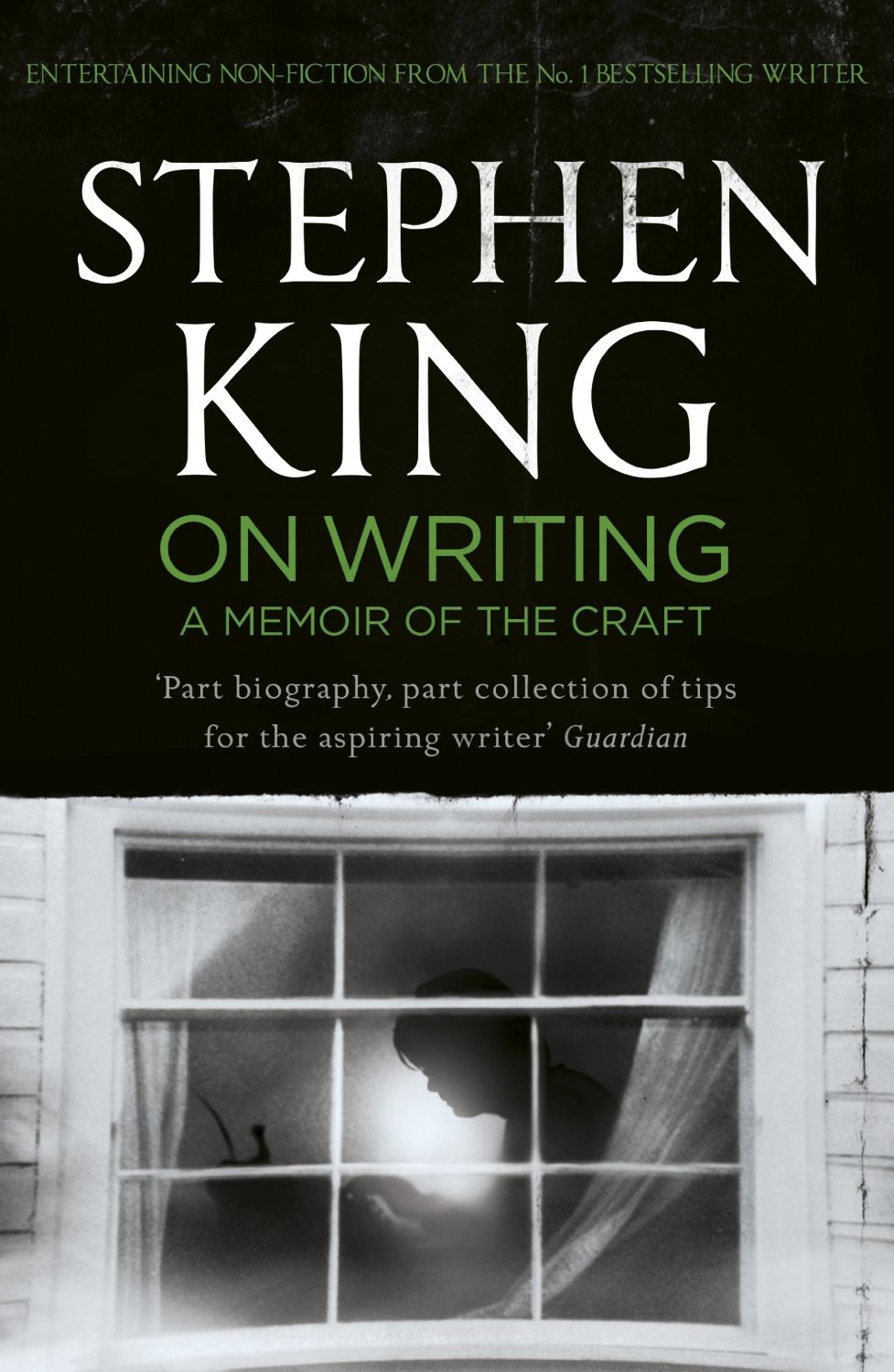
On Writing by Stephen King
On Writing

When it’s on target, a simile delights us in much the same way meeting an old friend in a crowd of strangers does. By comparing two seemingly unrelated objects—a restaurant bar and a cave, a mirror and a mirage—we are sometimes able to see an old thing in a new and vivid way. Even if the result is mere clarity instead of beauty, I think writer and reader are participating together in a kind of miracle. Maybe that’s drawing it a little strong, but yeah—it’s what I believe.’

Stephen King. On Writing: A Memoir of the Craft

‘Metaphors are not simply logical, linear forms of verbal behavior: they are more like pictures. The point of the ACT metaphors is often hard to capture in a simple moral or verbal conclusion. Instead, metaphors present a picture of how things work in a given domain. Carefully presented metaphors can be a kind of experiential exercise—as if one had actually experienced the described event or story. The event is verbal, and thus the experiences are derived and not direct, but the impact of the talk is still more experiential because the talk used is not linear, analytic, or proscriptive. This is advantageous inasmuch as ACT is attempting to ground client action in the direct experience of contingencies and in rules that track those contingencies. Metaphors help set a social/verbal context in which overreliance on rationality is questioned and where the wisdom of directly experienced contingencies is more highly valued.’

Steven C. Hayes, Kirk D. Strosahl, Kelly G. Wilson. Acceptance and Commitment Therapy: An Experiential Approach to Behavior Change

It’s not what you feel, it’s how you feel it.

Instead of trying to change or avoid uncomfortable thoughts and feelings, try to change how you feel about your experiences.

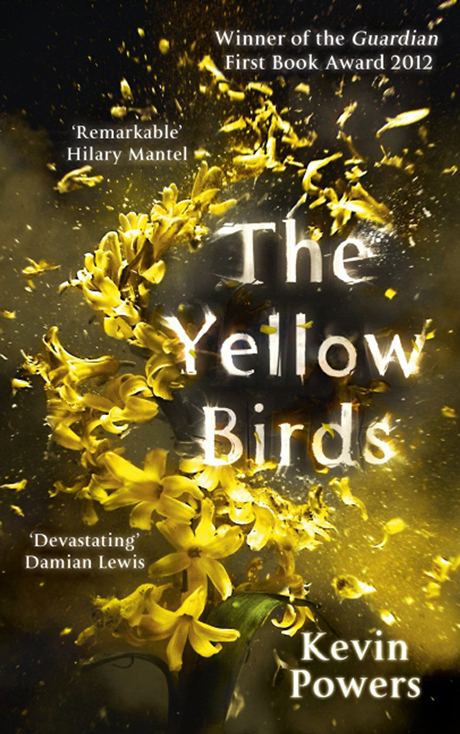
The Yellow Birds by Kevin Powers
The Yellow Birds

‘I had less and less control over my own history each day. I suppose I could have made some kind of effort. It should have been easy to trace: this happened, I was here, that happened next, all of which led inevitably to the present moment. I could have picked up a handful of dirt from the street outside, some wax from a candle on the altarpiece, ash from the incense as it swung past. I could have wrung it out, hoping I might find an essential thing that would give meaning to this place or that time. I did not. Certainty had surrendered all its territory in my mind. I’d have just been left with a mess in my hands anyway, no more. I realized, as I stood there in the church, that there was a sharp distinction between what was remembered, what was told, and what was true.’

Kevin Powers. The Yellow Birds.

‘Finding a way to transcend the content of thoughts and other internal events may be the most useful strategy for being able to start living life after surviving a traumatic experience. Because of the power of language, we know that initially you may start avoiding one or two things that remind you of your trauma, but, over time, a wider circle of events will start having the same impact on you. Chances are, you’ve already noticed this impact of an ever-widening circle of things that cannot happen, places that you can’t go, people you feel you shouldn’t see, or things you cannot talk about. Eventually, you may simply be wracked with tension and no longer able to trace it all the way back to the original trauma. That’s the impact of language: Events, including mental events such as thoughts and feelings, start having the same impact on you as the trauma itself.

‘Your life can become about something other than trying to get away from a big part of yourself: your memories, your feelings, your thoughts, your own bodily sensations—basically, the passengers on your bus. In ACT, instead of changing what you experience (thoughts, feelings, memories), we focus on changing how you experience them. If you can experience all aspects of yourself with awareness and without all the pitfalls associated with language, you can begin to move forward in ways that are consistent with values and goals in your life.’

Victoria M. Follette and Jacqueline Pistorello. Finding Life Beyond Trauma: Using Acceptance and Commitment Therapy to Heal from Post-Traumatic Stress and Trauma-Related Problems.

Developing character – in fiction and life

To create great characters, writers need to understand their own thoughts and feelings first.

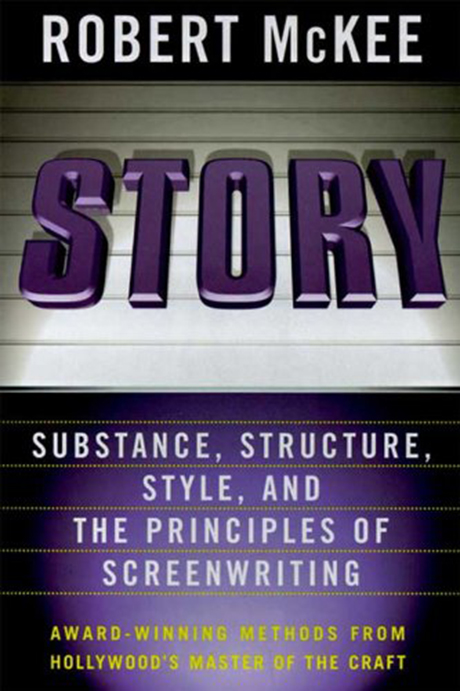
Story by Robert McKeeWe all share the same crucial human experiences. Each of us is suffering and enjoying, dreaming and hoping of getting through our days with something of value. As a writer, you can be certain that everyone coming down the street toward you, each in his own way, is having the same fundamental human thoughts and feelings that you are. This is why when you ask yourself, “If I were this character in these circumstances, what would I do?” The honest answer is always correct. You would do the human thing. Therefore, the more you penetrate the mysteries of your own humanity, the more you come to understand yourself, the more you are able to understand others.

Robert McKee. Story: Style, Structure, Substance, and the Principles of Screenwriting.

Often many people we meet in our daily lives seem to have it all. They seem happy. They look satisfied with their lives. You’ve probably had the experience of walking down the street when you’re having a particularly bad day, and you’ve looked around and thought, “Why can’t I just be happy like everyone around me? They don’t suffer from chronic panic (or depression, or a substance abuse problem). They don’t feel as if a dark cloud is always looming over their heads. They don’t suffer the way I suffer. Why can’t I be like them?”

Here’s the secret: They do and you are. We all have pain. All human beings, if they live long enough, have felt or will feel the devastation of losing someone they love. Every single person has felt or will feel physical pain. Everybody has felt sadness, shame, anxiety, fear, and loss. We all have memories that are embarrassing, humiliating, or shameful. We all carry painful hidden secrets. We tend to put on shiny, happy faces, pretending that everything is okay, and that life is “all good.” But it isn’t and it can’t be. To be human is to feel pain in ways that are orders of magnitude more pervasive than what the other creatures on planet Earth feel.

Steven C. Hayes and Spencer Smith. Get Out of Your Mind and Into Your Life: The New Acceptance and Commitment Therapy.

Inspiration from the inside

Find inspiration to write a truly great story by examining the things that matter most to you.

Write Something That May Change Your Life

First, write down your wish list, a list of everything you would like to see up on the screen, in a book, or at the theater. It’s what you are passionately interested in, and it’s what entertains you. You might jot down characters you have imagined, cool plot twists, or great lines of dialogue that have popped into your head. You might list themes that you care about or certain genres that always attract you.

The Anatomy of Story by John TrubyWrite them all down on as many sheets of paper as you need. This is your own personal wish list, so don’t reject anything. Banish thoughts like “That would cost too much money.” And don’t organize while you write. Let one idea trigger another.

The second exercise is to write a premise list. This is a list of every premise you’ve ever thought of. That might be five, twenty, fifty, or more. Again, take as many sheets of paper as you need. The key requirement of the exercise is that you express each premise in one sentence. This forces you to be very clear about each idea. And it allows you to see all your premises together in one place.

Once you have completed both your wish list and your premise list, lay them out before you and study them.

As you study, key patterns will start to emerge about what you love. This, in the rawest form possible, is your vision. It’s who you are, as a writer and as a human being, on paper in front of you. Go back to it often.

Notice that these two exercises are designed to open you up and to integrate what is already deep within you. They won’t guarantee that you write a story that changes your life. Nothing can do that. But once you’ve done this essential bit of self-exploration, any premise you come up with is likely to be more personal and original.

John Truby. The Anatomy of Story: 22 Steps to Becoming a Master Storyteller.

In ACT, the values assessment process serves a variety of assessment and intervention purposes. First, the client may become aware of long suppressed values. This process is motivational in the sense that the client may find major discrepancies between valued versus current behaviors. Second, the process of values assessment can help highlight a place in the client’s life in which everything is absolutely perfect and pristine.

Steven C. Hayes, Kirk D. Strosahl and Kelly G. Wilson. Acceptance and Commitment Therapy: An Experiential Approach to Behavior Change.

Ernest Hemingway in the moment

A writer has to learn to feel the present moment in order to reproduce the sounds, actions and emotions for the reader.

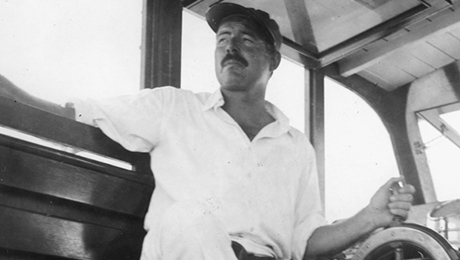
Hemingway on his boat the Pilar
Hemingway on his boat, the Pilar

Watch what happens today. If we get into a fish see exactly what it is that everyone does. If you get a kick out of it while he is jumping remember back until you see exactly what the action was that gave you that emotion. Whether it was the rising of the line from the water and the way it tightened like a fiddle string until drops started from it, or the way he smashed and threw water when he jumped. Remember what the noises were and what was said. Find what gave you the emotion, what the action was that gave you the excitement. Then write it down making it clear so the reader will see it too and have the same feeling you had.’

Ernest Hemingway. Monologue to the Maestro: A High Seas Letter.

‘To allow ourselves to be truly in touch with where we already are, no matter where that is, we have got to pause in our experience long enough to let the present moment sink in; long enough to actually feel the present moment, to see it in its fullness, to hold it in awareness and thereby come to know and understand it better. Only then can we accept the truth of this moment of our life, learn from it, and move on.’

Jon Kabat-Zinn. Wherever You Go, There You Are

Let your panic attack pass by

When a panic attack strikes, it can be better to give it the space and air it needs, just as the sky gives space to a storm until it passes.
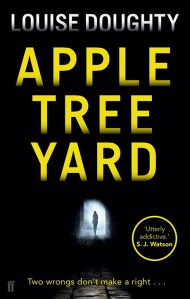
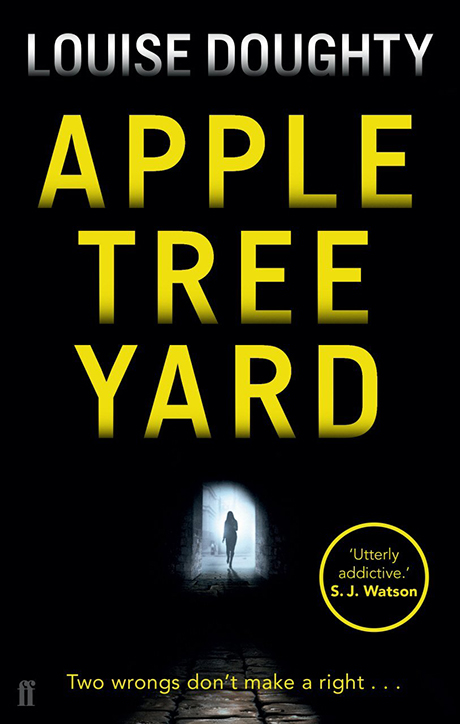
Apple Tree Yard by Louise Doughty‘So in total, you’ve been working in or visiting the Borough of Westminster for, what, around twelve years? Longer?’

‘Longer probably,’ I say, and the moment starts building then, there, a profound sense of unease located somewhere inside me, identifiable as a slight clutching of my solar plexus. I diagnose it in myself even as I am baffled by it.

‘So,’ she says, and her voice becomes slow, gentle. ‘It would be fair to say that with all that commuting and walking from the Tube and lunch hours and so on, that you are very familiar with the area?’

It is building. My breath begins to deepen. I can feel that my chest is rising and falling, imperceptibly at first, but the more I try to control myself, the more obvious it becomes. The atmosphere inside the court tightens, everyone can sense it. The judge is staring at me. Am I imagining it, or has the jury member in the pink shirt on the periphery of my vision sat up a little straighter, leaned forward in his seat? All at once, I dare not look at the directly. I dare not look at you, sitting in the dock.

I nod, suddenly unable to speak. I know that in a few seconds, I will start to hyperventilate. I know this even though I have never done it before.
The barrister’s voice is low and sinuous, ‘You’re familiar with the shops, the cafés…’ Sweat prickles the nape of my neck. My scalp is shrinking. She pauses. She has noted my distress and wants me to know that I have guessed correctly: I know where she is going with this line of questioning, and she knows I know. ‘The small side streets…’ She pauses again. ‘The back alleyways…’

And that is the moment. That is the moment when it all comes crashing down.

I am hyperventilating openly now, breathing in great deep gulps. My defence barrister – poor Robert – is staring at me, puzzled and alarmed.

Louise Doughty. Apple Tree Yard

‘The mind is home to our thought processes, and with its perceptions we create our world. When panic occupies and consumes our thoughts, it can take over and hold us hostage. Panicky thoughts race and swirl about, and the common result is feeling overwhelmed by a sense of impending doom. These thoughts may send us to the emergency room believing that we’re having a heart attack.

These thoughts can paralyze us so much that we are unable to get out of the house. These thoughts can make us break out in a cold sweat and begin to hyperventilate just before we give a speech.

As a way to work with panic, perhaps this metaphor will be helpful: As you learn to sit back and just experience the coming and going of your mind states, you can be like the sky giving space to a storm. It is the virtue of the sky, which is made of air, to give as much space as a storm needs—and in the end, as a result of having that space, the storm eventually dissipates. In the same vein, as you give space to the storms of panic, acknowledging what’s present in the body and mind and letting it be, it too will gradually dissipate, recede, or fade away.

Stormy mind states are here for a while and then they leave. Where they came from and where they go is often difficult to comprehend, but what’s most important is to know that they are here and that they are governed by the laws of change.’

Bob Stahl and Wendy Millstine. Calming the Rush of Panic: A Mindfulness-Based Stress Reduction Guide to Freeing Yourself from Panic Attacks and Living a Vital


Self-editing and self-knowledge

Editing your own writing can mean a lot of self-reflection too. The trick is to realise that the content is not what’s important.

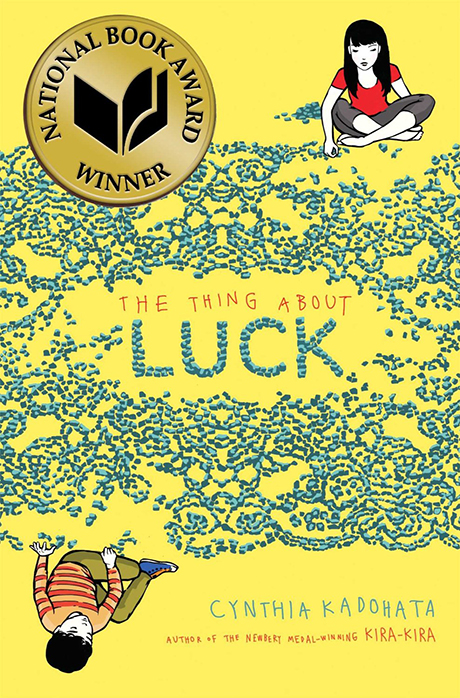
The Thing about Luck by Cynthia KadohataI try to find my deepest, often hidden feelings about what’s working and what’s not. This is difficult because I do lie to myself without being aware that that’s what I’m doing. For me it’s mainly a matter of finding the path to being honest with myself, which is not always a path I enjoy walking down. It’s not an orderly process. It involves a lot of flailing around.’

Cynthia Kadohata. (2013, November 25). National Book Award Winner Cynthia Kadohata on Self-Editing: “It involves a lot of flailing around.” Retrieved March 11, 2014, from Galley Cat. Pictured right, Kadohata’s award winning book The Thing About Luck.

‘A healthy human life requires continuous and flexible verbal self-knowledge … it is rare that content itself is the important issue. ACT therapists encourage clients to see what they see as they see it, without objectifying or concretizing this content in order to justify what was felt or seen. This helps remove the social contingencies that encourage a client to lie or to self-deceive. The irony is that when the specific content of self-knowledge is no longer so much at issue, fluid and useful self-knowledge is more likely to be fostered.

Steven C. Hayes, Kirk D. Strosahl and Kelly G. Wilson. Acceptance and Commitment Therapy: An Experiential Approach to Behavior Change.

Let go of guilt

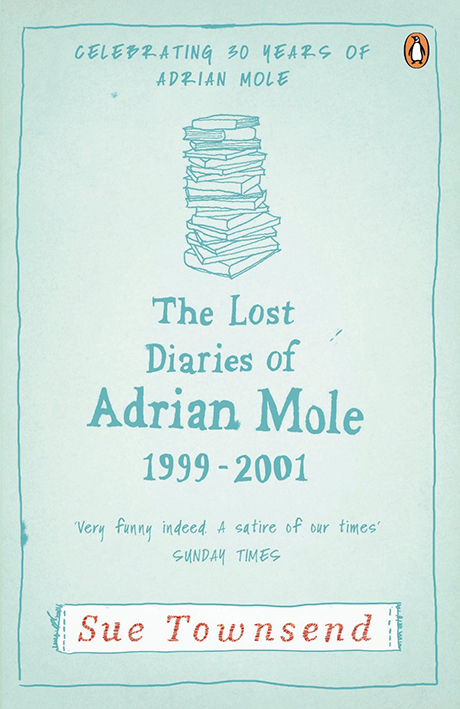
A reminder, after the sad news of Sue Townsend’s death, that Adrian Mole was therapeutic to so many of us.

The Lost Diaries of Adrian Mole by Sue TownsendMy mother is now in the hospital 60 miles away, where they are treating her pneumonia. I refuse to feel guilty. Guilt is a destructive emotion and doesn’t fit in with my Life Plan.’

Sue Townsend. The Lost Diaries of Adrian Mole, 1999-2001

‘The client should understand that life runs in real time; it works by addition, not subtraction. Guilt regarding past failures has no necessary relationship to present commitments. The surest way to undo a commitment is to functionally link it with something that is dead, gone, and can’t be changed. Guilt is always connected to “I’m bad” and thus weakens the client’s ability to move ahead.’

Steven C. Hayes, Kirk D. Strosahl and Kelly G. Wilson. Acceptance and Commitment Therapy: An Experiential Approach to Behavior Change