Let your panic attack pass by

When a panic attack strikes, it can be better to give it the space and air it needs, just as the sky gives space to a storm until it passes.

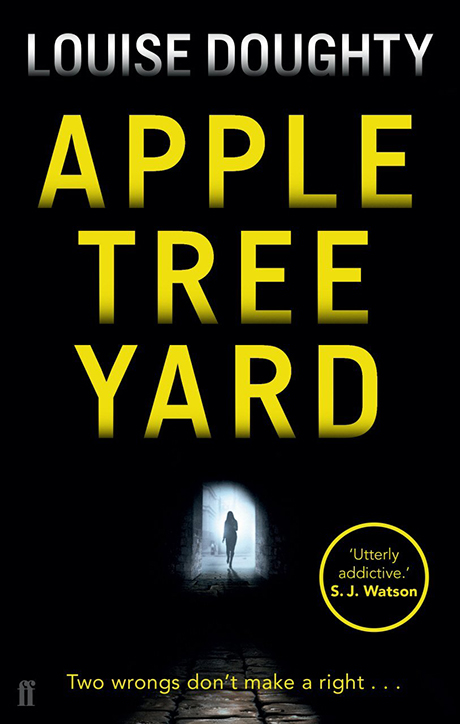
Apple Tree Yard by Louise Doughty‘So in total, you’ve been working in or visiting the Borough of Westminster for, what, around twelve years? Longer?’

‘Longer probably,’ I say, and the moment starts building then, there, a profound sense of unease located somewhere inside me, identifiable as a slight clutching of my solar plexus. I diagnose it in myself even as I am baffled by it.

‘So,’ she says, and her voice becomes slow, gentle. ‘It would be fair to say that with all that commuting and walking from the Tube and lunch hours and so on, that you are very familiar with the area?’

It is building. My breath begins to deepen. I can feel that my chest is rising and falling, imperceptibly at first, but the more I try to control myself, the more obvious it becomes. The atmosphere inside the court tightens, everyone can sense it. The judge is staring at me. Am I imagining it, or has the jury member in the pink shirt on the periphery of my vision sat up a little straighter, leaned forward in his seat? All at once, I dare not look at the directly. I dare not look at you, sitting in the dock.

I nod, suddenly unable to speak. I know that in a few seconds, I will start to hyperventilate. I know this even though I have never done it before.
The barrister’s voice is low and sinuous, ‘You’re familiar with the shops, the cafés…’ Sweat prickles the nape of my neck. My scalp is shrinking. She pauses. She has noted my distress and wants me to know that I have guessed correctly: I know where she is going with this line of questioning, and she knows I know. ‘The small side streets…’ She pauses again. ‘The back alleyways…’

And that is the moment. That is the moment when it all comes crashing down.

I am hyperventilating openly now, breathing in great deep gulps. My defence barrister – poor Robert – is staring at me, puzzled and alarmed.

Louise Doughty. Apple Tree Yard
‘The mind is home to our thought processes, and with its perceptions we create our world. When panic occupies and consumes our thoughts, it can take over and hold us hostage. Panicky thoughts race and swirl about, and the common result is feeling overwhelmed by a sense of impending doom. These thoughts may send us to the emergency room believing that we’re having a heart attack.

These thoughts can paralyze us so much that we are unable to get out of the house. These thoughts can make us break out in a cold sweat and begin to hyperventilate just before we give a speech.

As a way to work with panic, perhaps this metaphor will be helpful: As you learn to sit back and just experience the coming and going of your mind states, you can be like the sky giving space to a storm. It is the virtue of the sky, which is made of air, to give as much space as a storm needs—and in the end, as a result of having that space, the storm eventually dissipates. In the same vein, as you give space to the storms of panic, acknowledging what’s present in the body and mind and letting it be, it too will gradually dissipate, recede, or fade away.

Stormy mind states are here for a while and then they leave. Where they came from and where they go is often difficult to comprehend, but what’s most important is to know that they are here and that they are governed by the laws of change.’

Bob Stahl and Wendy Millstine. Calming the Rush of Panic: A Mindfulness-Based Stress Reduction Guide to Freeing Yourself from Panic Attacks and Living a Vital

Self-editing and self-knowledge

Editing your own writing can mean a lot of self-reflection too. The trick is to realise that the content is not what’s important.

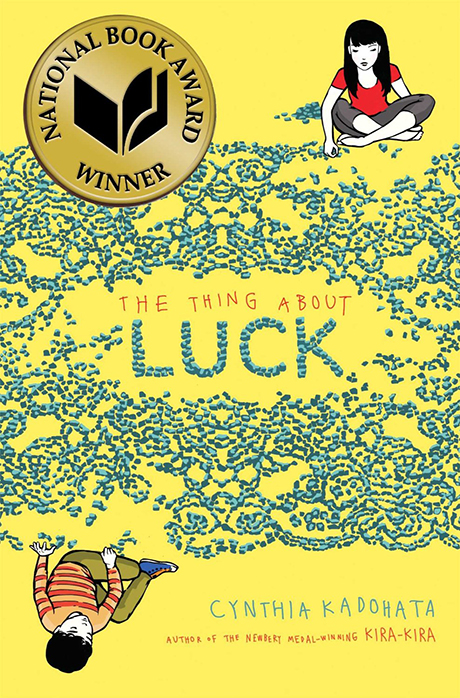
The Thing about Luck by Cynthia KadohataI try to find my deepest, often hidden feelings about what’s working and what’s not. This is difficult because I do lie to myself without being aware that that’s what I’m doing. For me it’s mainly a matter of finding the path to being honest with myself, which is not always a path I enjoy walking down. It’s not an orderly process. It involves a lot of flailing around.’

Cynthia Kadohata. (2013, November 25). National Book Award Winner Cynthia Kadohata on Self-Editing: “It involves a lot of flailing around.” Retrieved March 11, 2014, from Galley Cat. Pictured right, Kadohata’s award winning book The Thing About Luck.

‘A healthy human life requires continuous and flexible verbal self-knowledge … it is rare that content itself is the important issue. ACT therapists encourage clients to see what they see as they see it, without objectifying or concretizing this content in order to justify what was felt or seen. This helps remove the social contingencies that encourage a client to lie or to self-deceive. The irony is that when the specific content of self-knowledge is no longer so much at issue, fluid and useful self-knowledge is more likely to be fostered.

Steven C. Hayes, Kirk D. Strosahl and Kelly G. Wilson. Acceptance and Commitment Therapy: An Experiential Approach to Behavior Change.

Let go of guilt

A reminder, after the sad news of Sue Townsend’s death, that Adrian Mole was therapeutic to so many of us.

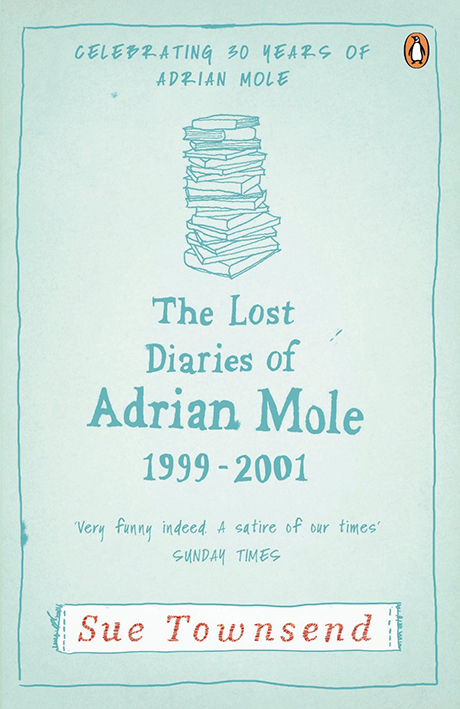
The Lost Diaries of Adrian Mole by Sue TownsendMy mother is now in the hospital 60 miles away, where they are treating her pneumonia. I refuse to feel guilty. Guilt is a destructive emotion and doesn’t fit in with my Life Plan.’

Sue Townsend. The Lost Diaries of Adrian Mole, 1999-2001

‘The client should understand that life runs in real time; it works by addition, not subtraction. Guilt regarding past failures has no necessary relationship to present commitments. The surest way to undo a commitment is to functionally link it with something that is dead, gone, and can’t be changed. Guilt is always connected to “I’m bad” and thus weakens the client’s ability to move ahead.’

Steven C. Hayes, Kirk D. Strosahl and Kelly G. Wilson. Acceptance and Commitment Therapy: An Experiential Approach to Behavior Change

Making mistakes is human

Ever said that dumb thought out loud and regretted it? Don’t worry, making mistakes is human, and it’s important to allow yourself the freedom to make mistakes.

This is my first day,” Mae noted.

The Circle by Dave EggersAnd then Mae, who intended to say “I shit you not,” instead decided to innovate, but something got garbled during her verbal innovation, and she uttered the words “I fuck you not,” knowing almost instantly that she would remember these words and hate herself for them, for decades to come.

“You fuck me not?” he asked, deadpan. “That sounds very conclusive. You’ve made a decision with very little information. You fuck me not. Wow.”

Mae tried to explain what she meant to say, how she thought, or some department of her brain thought, that she would turn the phrase around a bit … But it didn’t matter. He was laughing now, and he knew she had a sense of humor, and she knew he did, too, and somehow he made her feels safe, made her trust that he would never bring it up again, that this terrible thing she said would remain between them, that they both understood mistakes are made by all and that they should, if everyone is acknowledging our common humanity, our common frailty and propensity for sounding and looking ridiculous a thousand times a day, that these mistakes should be allowed to be forgotten.’

Dave Eggers. The Circle.

‘We try to do our best, but even then we will sometimes get it wrong. (Besides that, is there really a person on this planet who always does their best in everything?) Making mistakes is part of being human and an essential part of any learning process. The only way to avoid it is to do nothing, which is probably the biggest mistake of all. Commitment means we take effective action, allow ourselves the freedom to make mistakes, accept ourselves compassionately when we screw up, and carry on moving in a valued direction.’

Russ Harris. The Happiness Trap: How to Stop Struggling and Start Living: A Guide to ACT.

How to deal with self-criticism

Self-criticism is part of what the mind does. Don’t ignore your inner censor. Listen, smile, and make peace with those thoughts.

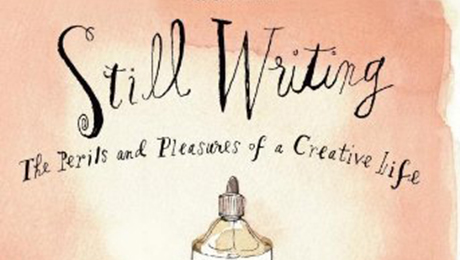
Still Writing by Dani ShapiroIt helps to think of that inner censor as a beloved but annoying friend who has moved in for the duration. That friend is never going away. So you make peace with your inner censor. You say some version of, thanks very much for sharing, and then move on, past that censoring voice, and into your work.”

Dani Shapiro in an interview with Salon.com, talking about her book Still Writing: The Perils and Pleasures of a Creative Life.

‘Learning mindfulness (like life in general) will always present difficulties and obstacles. Perhaps you’re pretty nasty to yourself through excessive self-criticism when things don’t work out how you want them to. The way to deal with this harsh inner voice is to listen to it, give it space to unfurl and bring to it a sense of curiosity in a gentle, warm way.

I used to be very self-critical of everything I did. When I first practised yoga, for example, I thought about how bad I was at doing the poses. The voice telling me I’m bad at yoga comes back occasionally, but now I simply notice it and usually smile when I hear it. The negative thought usually dissipates quickly after that and I and I can carry on with my yoga (which I am now better at through steady practice!).’

Shamash Alidina and Joelle Jane Marshall. Mindfulness Workbook For Dummies

Stay calm, don’t anticipate problems

Jules Verne (died this day 1905) knew that it doesn’t help to anticipate problems or dangers. It is much better to remain in the moment, stay calm, and only deal with the problem if it actually arises.

Twenty Thousand Leagues under the Seas by Jules VerneMeanwhile, Ned Land gave free vent to his indignation.

‘Confound it!’ cried he, ‘here are people who come up to the Scotch for hospitality. They only just miss being cannibals. I should not be surprised at it, but I declare that they shall not eat me without my protesting.’

‘Calm yourself, friend Ned, calm yourself,’ replied Conseil, quietly. ‘Do not cry out before you are hurt. We are not quite done for yet.’

‘Not quite,’ sharply replied the Canadian, ‘but pretty near, at all events. Things look black. Happily, my bowie-knife I have still, and I can always see well enough to use it. The first of these pirates who lays a hand on me – ‘

‘Do not excite yourself, Ned,’ I said to the harpooner, ‘and do not compromise us by useless violence. Who knows that they will not listen to us? Let us rather try to find out where we are.’

Jules Verne. Twenty Thousand Leagues Under the Seas.

‘If you find yourself anticipating distress, calculating your escape … your anxious thoughts will intensify. When this happens, try to stay in the now, and your panicky thoughts will settle down. Do what you can to return your focus to your immediate surroundings and your breath. You may notice people having a conversation nearby, or the texture of the carpet, or the colors in a poster.’

Bob Stahl and Wendy Millstine. Calming the Rush of Panic: A Mindfulness-Based Stress Reduction Guide to Freeing Yourself from Panic Attacks and Living a Vital.

How to observe your own thoughts

Sometimes, when life gets a little too ‘soap opera’, it can be useful to step back and observe your thoughts and emotions.

Choke by Chuck PalahniukAt this point, how my life starts to feel is like I’m acting in a soap opera being watched by people on a soap opera being watched by people on a soap opera being watched by real people, somewhere.

Chuck Palahniuk. Choke

‘Once you’re relaxed, imagine yourself sitting in a movie theater. This is your own private theater. It’s safe and no one else is in it. You’re sitting several rows back from the screen, and it’s comfortably dark. Up on the screen you begin to see the thoughts, emotions, memories, and sensations that pass through your awareness.

Just sit and watch. Don’t follow any particular thought or emotion into the screen, just as you wouldn’t try to jump into the screen during a movie. Just watch without judgment, reaction, or distraction

As you observe your big deal mind, simply take note of what it presents; simply watch and name. Notice which thoughts have a pull on your attention and emotions. And also note any physical sensations you experience. Stay with this for a few minutes before moving on to the next part of the practice.

Now imagine that there’s another ‘you’ in this theater, sitting all the way in the back of the theater, in the very last row directly behind the first you. This second you is just sitting there watching the you up front, who is still just watching the screen.

Stay with this for a few minutes and notice what happens, paying particular attention to your emotional, physical, and mental reactions.

Now imagine that there is a third you, standing back the door of the theater. This third you is simply watching the second you, seated in the back row of the theater, who is still watching the you in the front, who is still watching all that is passing across the screen.’

Thomas Roberts. The Mindfulness Workbook: A Beginner’s Guide to Overcoming Fear and Embracing Compassion (New Harbinger Self-Help Workbook)

Memory isn’t a video

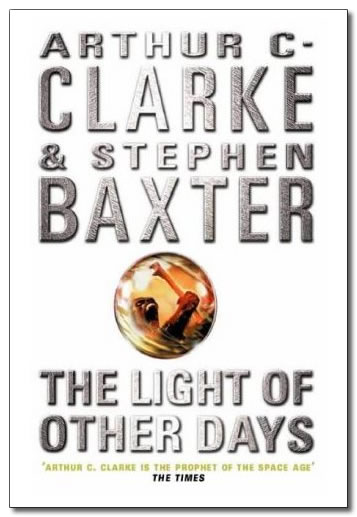
Memory doesn’t record life like a video camera. Instead, it adds associated details and becomes, like Arthur C. Clarke said, ‘a story-telling machine’.

The Light of Other Days by Arthur C Clarke and Stephen Baxter“What is human memory?” Manning asked. He gazed at the air as he spoke, as if lecturing an invisible audience – as perhaps he was. “It certainly is not a passive recording mechanism, like a digital disc or a tape. It is more like a story-telling machine. Sensory information is broken down into shards of perception, which are broken down again to be stored as memory fragments. And at night, as the body rests, these fragments are brought out from storage, reassembled and replayed. Each run-through etches them deeper into the brain’s neural structure. And each time a memory is rehearsed or recalled it is elaborated. We may add a little, lose a little, tinker with the logic, fill in sections that have faded, perhaps even conflate disparate events.

“In extreme cases, we refer to this as confabulation. The brain creates and recreates the past, producing, in the end, a version of events that may bear little resemblance to what actually occurred. To first order, I believe it’s true to say that everything I remember is false.”

Arthur C. Clarke and Stephen Baxter. The Light of Other Days

‘Memory doesn’t store everything we perceive, but instead takes what we have seen or heard and associates it with what we already know. These associations help us to discern what is important and to recall details about what we’ve seen. They provide “retrieval cues” that make our memories more fluent. In most cases, such cues are helpful. But these associations can also lead us astray, precisely because they lead to an inflated sense of the precision of memory. We cannot easily distinguish between what we recall verbatim and what we construct based on associations and knowledge.’

Christopher Chabris and Daniel Simons. The Invisible Gorilla: How Our Intuitions Deceive Us

ACT on life’s hard choices

We have to make choices in life, and we learn from acceptance and commitment therapy that the freedom to choose is liberating. The failure to choose, says poet Diane Wakoski, is greed.

Greed: Pt. 8, 9, 11 by Diane WakoskiBut pick and choose.
Robot or Man. Machine- or hand-made,
You cannot have both.
Greed, I keep reminding you,
is the failure to choose. The unwillingness to pick one thing over
another. Wealth or simplicity; you cannot have both.

Diane Wakoski. Greed: Pt. 8, 9, 11

‘Life is hard. Life is also many other things. Ultimately your life is what you choose to make it. When the word-machine dominates, life works one way. When the verbal evaluative side of you is but one source of input, life works differently. The choices themselves aren’t always easy, but finding the freedom to choose is a liberating experience. It’s your life. It is not the word-machine’s—even though (of course) it tells you otherwise.’

Steven C. Hayes and Spencer Smith. Get Out of Your Mind and Into Your Life: The New Acceptance and Commitment Therapy