Learn to surf your urges

Through mindfulness, you can recognise the moment you have a strong urge of any kind, and then ‘surf’ the wave of that urge until it passes.

The Ballad of a Small Player by Lawrence OsborneI wondered what would happen if I stopped at one of the large casinos and made a single bet with HK $1,000. I had not considered doing this because I had resolved to have the day off. But the more I thought about it, the more I found the idea irresistible. Yes, I thought, I could leave off for twenty hours, but then again I could just go in right now and get my fix, and what of it? Just one bet. Just one bet before bed, for after all, life is short and much shorter than you think.’

Lawrence Osborne. The Ballad of a Small Player: A Novel.

‘Mindfulness involves acceptance of the constantly changing experiences of the present moment, whereas addiction is an inability to accept the present moment and a persistent seeking of the next ‘high’ associated with the addiction. The metaphor of ‘urge surfing’ encourages clients to imagine that urges are ocean waves that grow gradually until they crest and subside. The client ‘rides’ the waves without giving in to the urges, thus learning that urges will pass. However, the client also learns that new urges will appear and that these urges cannot easily be eliminated. Instead, urges must be accepted as normal responses to appetitive cues. Mindfulness skills enable the client to observe the urges as they appear, accept them nonjudgmentally, and cope with them in adaptive ways.’

Ruth A. Baer. Mindfulness Training as a Clinical Intervention: A Conceptual and Empirical Review.

Don’t be bullied by your thoughts

You don’t have to let your thoughts lead the way. Find out what’s important to you, what truly matters to you, and let those values guide your actions.

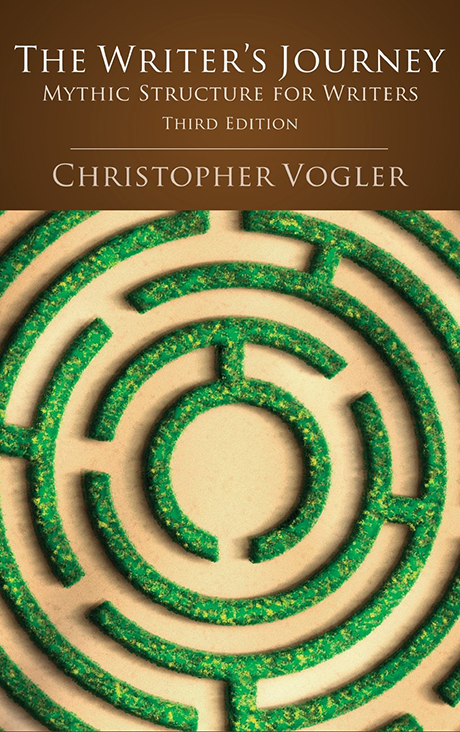
The Writers Journey by Christopher VoglerTom Dunson, played by John Wayne in the classic Western Red River, makes a terrible moral error early in his career as a cattleman, by choosing to value his mission more than his love, and following his head rather than his heart. This choice leads to the death of his lover, and for the rest of the story he bears the psychic scars of that wound. His suppressed guilt makes him more and more harsh, autocratic, and judgmental, and almost brings him and his adopted son to destruction before the wound is healed by letting love back into his life.

A hero’s wounds may not be visible. People put a great deal of energy into protecting and hiding these weak and vulnerable spots. But in a fully developed character they will be apparent in the areas where she is touchy, defensive, or a little too confident. The wound may never be openly expressed to the audience — it can be a secret between the writer and the character. But it will help give the hero a sense of personal history and realism, for we all bear some scars from past humiliations, rejections, disappointments, abandonments, and failures. Many stories are about the journey to heal a wound and to restore a missing piece to a broken psyche.

Christopher Vogler. The Writers Journey: Mythic Structure for Writers, 3rd Edition.
.

Often we know full well when we’re making excuses—we just need to be honest with ourselves. But if you’ve set a valued goal, and your mind gives you a reason not to attempt it, sometimes it’s not so clear that this is just an excuse. So if you’re genuinely unsure whether the thought is merely an excuse for inaction, or a statement of fact about something that truly is impossible, just ask yourself this question: ‘If the person you care about more than anyone else in the world were kidnapped, and the kidnappers told you they will never release that person until you take a particular action toward your goals, would you then take action?’ If the answer is yes, then you know that any reason (for not taking that action) is merely an excuse.

‘Ah, yes,’ you may be saying, ‘but that’s just a silly hypothetical question. In the real world, the person I love has not been kidnapped.’

Right you are. But what’s at stake in the real world is something equally important: your life! Do you want to live a life in which you do the things that are really meaningful to you? Or do you want to live a life of drifting aimlessly, letting your demons run the ship?

‘Okay,’ I hear you say. ‘I agree that I could attempt this goal, but it’s not that important to me.’

The question here is, are you being honest with yourself? Or are you just buying into another thought? If the goal you’re avoiding is truly unimportant to you, fine, don’t attempt it. But make sure you check in with your values. And if this goal really is something you value, then you are faced with a choice: either act in accordance with what you value, or let yourself be pushed around by your own thoughts.

Russell Harris. Introductory Workshop Handout.

Developing character – in fiction and life

To create great characters, writers need to understand their own thoughts and feelings first.

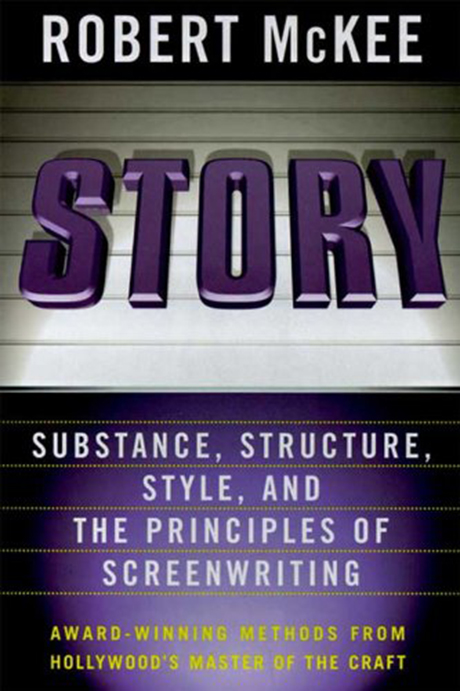
Story by Robert McKeeWe all share the same crucial human experiences. Each of us is suffering and enjoying, dreaming and hoping of getting through our days with something of value. As a writer, you can be certain that everyone coming down the street toward you, each in his own way, is having the same fundamental human thoughts and feelings that you are. This is why when you ask yourself, “If I were this character in these circumstances, what would I do?” The honest answer is always correct. You would do the human thing. Therefore, the more you penetrate the mysteries of your own humanity, the more you come to understand yourself, the more you are able to understand others.

Robert McKee. Story: Style, Structure, Substance, and the Principles of Screenwriting.

Often many people we meet in our daily lives seem to have it all. They seem happy. They look satisfied with their lives. You’ve probably had the experience of walking down the street when you’re having a particularly bad day, and you’ve looked around and thought, “Why can’t I just be happy like everyone around me? They don’t suffer from chronic panic (or depression, or a substance abuse problem). They don’t feel as if a dark cloud is always looming over their heads. They don’t suffer the way I suffer. Why can’t I be like them?”

Here’s the secret: They do and you are. We all have pain. All human beings, if they live long enough, have felt or will feel the devastation of losing someone they love. Every single person has felt or will feel physical pain. Everybody has felt sadness, shame, anxiety, fear, and loss. We all have memories that are embarrassing, humiliating, or shameful. We all carry painful hidden secrets. We tend to put on shiny, happy faces, pretending that everything is okay, and that life is “all good.” But it isn’t and it can’t be. To be human is to feel pain in ways that are orders of magnitude more pervasive than what the other creatures on planet Earth feel.

Steven C. Hayes and Spencer Smith. Get Out of Your Mind and Into Your Life: The New Acceptance and Commitment Therapy.

Inspiration from the inside

Find inspiration to write a truly great story by examining the things that matter most to you.

Write Something That May Change Your Life

First, write down your wish list, a list of everything you would like to see up on the screen, in a book, or at the theater. It’s what you are passionately interested in, and it’s what entertains you. You might jot down characters you have imagined, cool plot twists, or great lines of dialogue that have popped into your head. You might list themes that you care about or certain genres that always attract you.

The Anatomy of Story by John TrubyWrite them all down on as many sheets of paper as you need. This is your own personal wish list, so don’t reject anything. Banish thoughts like “That would cost too much money.” And don’t organize while you write. Let one idea trigger another.

The second exercise is to write a premise list. This is a list of every premise you’ve ever thought of. That might be five, twenty, fifty, or more. Again, take as many sheets of paper as you need. The key requirement of the exercise is that you express each premise in one sentence. This forces you to be very clear about each idea. And it allows you to see all your premises together in one place.

Once you have completed both your wish list and your premise list, lay them out before you and study them.

As you study, key patterns will start to emerge about what you love. This, in the rawest form possible, is your vision. It’s who you are, as a writer and as a human being, on paper in front of you. Go back to it often.

Notice that these two exercises are designed to open you up and to integrate what is already deep within you. They won’t guarantee that you write a story that changes your life. Nothing can do that. But once you’ve done this essential bit of self-exploration, any premise you come up with is likely to be more personal and original.

John Truby. The Anatomy of Story: 22 Steps to Becoming a Master Storyteller.

In ACT, the values assessment process serves a variety of assessment and intervention purposes. First, the client may become aware of long suppressed values. This process is motivational in the sense that the client may find major discrepancies between valued versus current behaviors. Second, the process of values assessment can help highlight a place in the client’s life in which everything is absolutely perfect and pristine.

Steven C. Hayes, Kirk D. Strosahl and Kelly G. Wilson. Acceptance and Commitment Therapy: An Experiential Approach to Behavior Change.

Ernest Hemingway in the moment

A writer has to learn to feel the present moment in order to reproduce the sounds, actions and emotions for the reader.

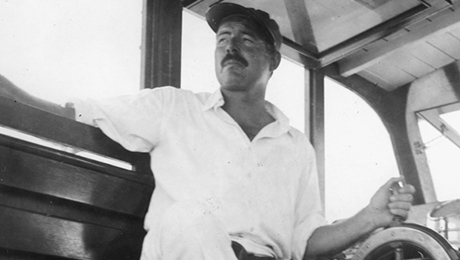
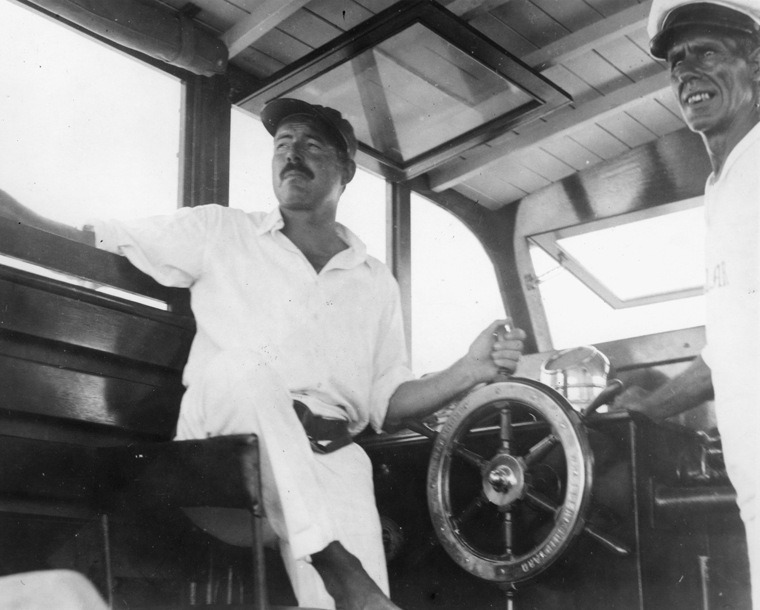
Hemingway on his boat the Pilar
Hemingway on his boat, the Pilar

Watch what happens today. If we get into a fish see exactly what it is that everyone does. If you get a kick out of it while he is jumping remember back until you see exactly what the action was that gave you that emotion. Whether it was the rising of the line from the water and the way it tightened like a fiddle string until drops started from it, or the way he smashed and threw water when he jumped. Remember what the noises were and what was said. Find what gave you the emotion, what the action was that gave you the excitement. Then write it down making it clear so the reader will see it too and have the same feeling you had.’

Ernest Hemingway. Monologue to the Maestro: A High Seas Letter.

‘To allow ourselves to be truly in touch with where we already are, no matter where that is, we have got to pause in our experience long enough to let the present moment sink in; long enough to actually feel the present moment, to see it in its fullness, to hold it in awareness and thereby come to know and understand it better. Only then can we accept the truth of this moment of our life, learn from it, and move on.’

Jon Kabat-Zinn. Wherever You Go, There You Are

Let your panic attack pass by

When a panic attack strikes, it can be better to give it the space and air it needs, just as the sky gives space to a storm until it passes.

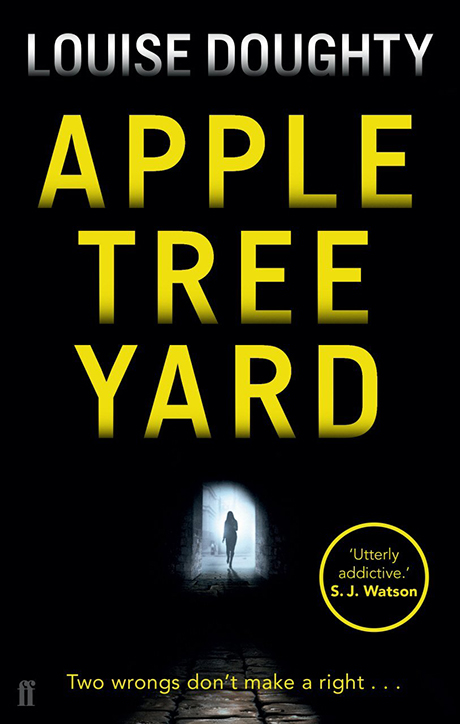
Apple Tree Yard by Louise Doughty‘So in total, you’ve been working in or visiting the Borough of Westminster for, what, around twelve years? Longer?’

‘Longer probably,’ I say, and the moment starts building then, there, a profound sense of unease located somewhere inside me, identifiable as a slight clutching of my solar plexus. I diagnose it in myself even as I am baffled by it.

‘So,’ she says, and her voice becomes slow, gentle. ‘It would be fair to say that with all that commuting and walking from the Tube and lunch hours and so on, that you are very familiar with the area?’

It is building. My breath begins to deepen. I can feel that my chest is rising and falling, imperceptibly at first, but the more I try to control myself, the more obvious it becomes. The atmosphere inside the court tightens, everyone can sense it. The judge is staring at me. Am I imagining it, or has the jury member in the pink shirt on the periphery of my vision sat up a little straighter, leaned forward in his seat? All at once, I dare not look at the directly. I dare not look at you, sitting in the dock.

I nod, suddenly unable to speak. I know that in a few seconds, I will start to hyperventilate. I know this even though I have never done it before.
The barrister’s voice is low and sinuous, ‘You’re familiar with the shops, the cafés…’ Sweat prickles the nape of my neck. My scalp is shrinking. She pauses. She has noted my distress and wants me to know that I have guessed correctly: I know where she is going with this line of questioning, and she knows I know. ‘The small side streets…’ She pauses again. ‘The back alleyways…’

And that is the moment. That is the moment when it all comes crashing down.

I am hyperventilating openly now, breathing in great deep gulps. My defence barrister – poor Robert – is staring at me, puzzled and alarmed.

Louise Doughty. Apple Tree Yard

‘The mind is home to our thought processes, and with its perceptions we create our world. When panic occupies and consumes our thoughts, it can take over and hold us hostage. Panicky thoughts race and swirl about, and the common result is feeling overwhelmed by a sense of impending doom. These thoughts may send us to the emergency room believing that we’re having a heart attack.

These thoughts can paralyze us so much that we are unable to get out of the house. These thoughts can make us break out in a cold sweat and begin to hyperventilate just before we give a speech.

As a way to work with panic, perhaps this metaphor will be helpful: As you learn to sit back and just experience the coming and going of your mind states, you can be like the sky giving space to a storm. It is the virtue of the sky, which is made of air, to give as much space as a storm needs—and in the end, as a result of having that space, the storm eventually dissipates. In the same vein, as you give space to the storms of panic, acknowledging what’s present in the body and mind and letting it be, it too will gradually dissipate, recede, or fade away.

Stormy mind states are here for a while and then they leave. Where they came from and where they go is often difficult to comprehend, but what’s most important is to know that they are here and that they are governed by the laws of change.’

Bob Stahl and Wendy Millstine. Calming the Rush of Panic: A Mindfulness-Based Stress Reduction Guide to Freeing Yourself from Panic Attacks and Living a Vital
Self-editing and self-knowledge

Editing your own writing can mean a lot of self-reflection too. The trick is to realise that the content is not what’s important.

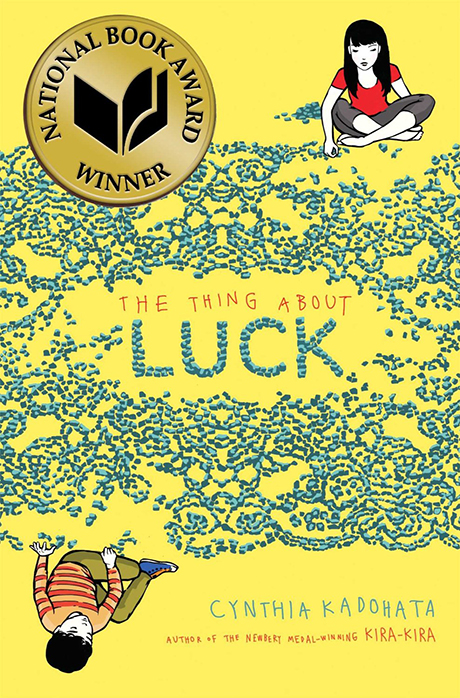
The Thing about Luck by Cynthia KadohataI try to find my deepest, often hidden feelings about what’s working and what’s not. This is difficult because I do lie to myself without being aware that that’s what I’m doing. For me it’s mainly a matter of finding the path to being honest with myself, which is not always a path I enjoy walking down. It’s not an orderly process. It involves a lot of flailing around.’

Cynthia Kadohata. (2013, November 25). National Book Award Winner Cynthia Kadohata on Self-Editing: “It involves a lot of flailing around.” Retrieved March 11, 2014, from Galley Cat. Pictured right, Kadohata’s award winning book The Thing About Luck.

‘A healthy human life requires continuous and flexible verbal self-knowledge … it is rare that content itself is the important issue. ACT therapists encourage clients to see what they see as they see it, without objectifying or concretizing this content in order to justify what was felt or seen. This helps remove the social contingencies that encourage a client to lie or to self-deceive. The irony is that when the specific content of self-knowledge is no longer so much at issue, fluid and useful self-knowledge is more likely to be fostered.

Steven C. Hayes, Kirk D. Strosahl and Kelly G. Wilson. Acceptance and Commitment Therapy: An Experiential Approach to Behavior Change.

Let go of guilt

A reminder, after the sad news of Sue Townsend’s death, that Adrian Mole was therapeutic to so many of us.

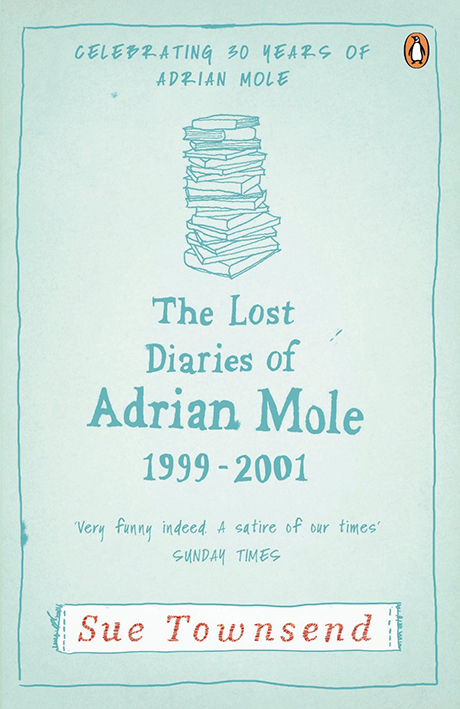
The Lost Diaries of Adrian Mole by Sue TownsendMy mother is now in the hospital 60 miles away, where they are treating her pneumonia. I refuse to feel guilty. Guilt is a destructive emotion and doesn’t fit in with my Life Plan.’

Sue Townsend. The Lost Diaries of Adrian Mole, 1999-2001

‘The client should understand that life runs in real time; it works by addition, not subtraction. Guilt regarding past failures has no necessary relationship to present commitments. The surest way to undo a commitment is to functionally link it with something that is dead, gone, and can’t be changed. Guilt is always connected to “I’m bad” and thus weakens the client’s ability to move ahead.’

Steven C. Hayes, Kirk D. Strosahl and Kelly G. Wilson. Acceptance and Commitment Therapy: An Experiential Approach to Behavior Change

Making mistakes is human

Ever said that dumb thought out loud and regretted it? Don’t worry, making mistakes is human, and it’s important to allow yourself the freedom to make mistakes.

This is my first day,” Mae noted.

The Circle by Dave EggersAnd then Mae, who intended to say “I shit you not,” instead decided to innovate, but something got garbled during her verbal innovation, and she uttered the words “I fuck you not,” knowing almost instantly that she would remember these words and hate herself for them, for decades to come.

“You fuck me not?” he asked, deadpan. “That sounds very conclusive. You’ve made a decision with very little information. You fuck me not. Wow.”

Mae tried to explain what she meant to say, how she thought, or some department of her brain thought, that she would turn the phrase around a bit … But it didn’t matter. He was laughing now, and he knew she had a sense of humor, and she knew he did, too, and somehow he made her feels safe, made her trust that he would never bring it up again, that this terrible thing she said would remain between them, that they both understood mistakes are made by all and that they should, if everyone is acknowledging our common humanity, our common frailty and propensity for sounding and looking ridiculous a thousand times a day, that these mistakes should be allowed to be forgotten.’

Dave Eggers. The Circle.

‘We try to do our best, but even then we will sometimes get it wrong. (Besides that, is there really a person on this planet who always does their best in everything?) Making mistakes is part of being human and an essential part of any learning process. The only way to avoid it is to do nothing, which is probably the biggest mistake of all. Commitment means we take effective action, allow ourselves the freedom to make mistakes, accept ourselves compassionately when we screw up, and carry on moving in a valued direction.’

Russ Harris. The Happiness Trap: How to Stop Struggling and Start Living: A Guide to ACT.